RF411
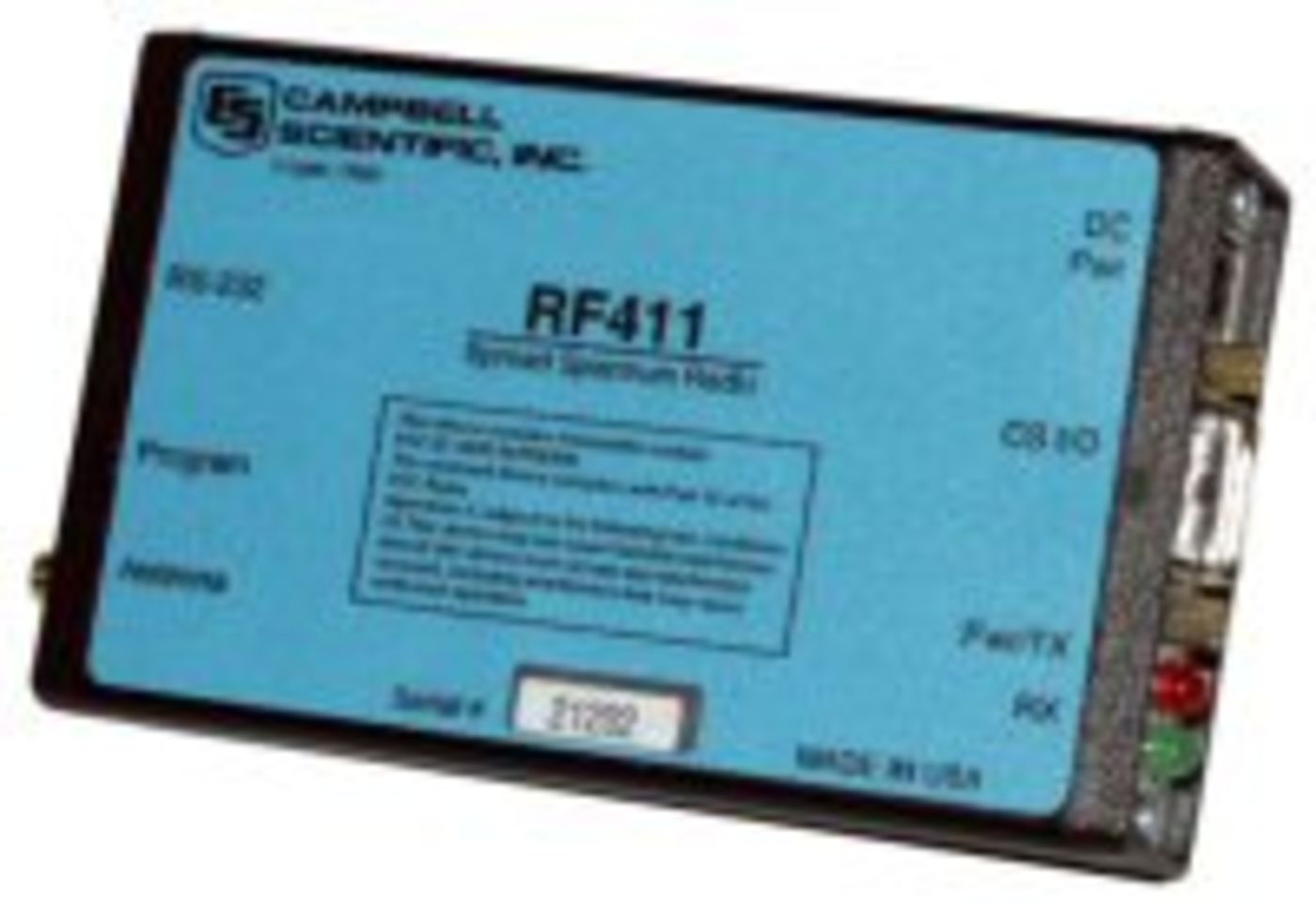
RF411
End of lifeConfigurable922-MHz Spread-Spectrum Radio
Pricing
- Model:
- RF411
- Item Number:
- RF411
- Warranty:
- 1 year
- Lead time:
- 21 days
Overview
The RF411 has a 920 to 928 MHz frequency range, which is used in Australia and Israel. This 100 mW spread-spectrum radio can transmit data to another RF411 radio, an RF431 radio, a CR211(X) datalogger, or an AVW211 interface.
The RF411 supports point-to-point and point-to-multipoint communications. It can serve as a field modem/radio while connected to the data logger or as a base station modem/radio while connected to a computer. The radio can also serve as a stand-alone RF router/repeater.
Technical Description
The RF411 reduces susceptibility to RF interference from other spread spectrum devices by providing user-selectable frequency hopping patterns. Spread spectrum radios spread the normally narrowband information signal over a relatively wide band of frequencies. This process allows communications to be more immune to noise and interference from RF sources such as pagers and cellular phones.
Benefits
- Rugged, low-cost transceivers
- Can be used in the field as a transceiver or in the office as the base station
- Transmits up to one mile with omnidirectional antenna; up to 10 miles with higher gain directional antennas at ideal conditions
- Settings stored in non-volatile memory
- RS-232 port for connecting to a computer; CS I/O port for connecting to a data logger
- Frequency-hops over 25 channels avoids interference from other spread-spectrum radios
- Optional extended temperature testing
- Faster communication due to elimination of some small "link state packets"
- Ability to have stand-alone RF router/repeaters (up to 8 repeaters)
- Greater immunity to interference and RF collisions by using RF retries
- Reduced power consumption by the data logger, as the radios perform "packet address filtering"
- Built-in setup menus allow access to advanced functionality
- Designed for use in PakBus networks
Specifications
- Operating Frequency
- 920 to 928 MHz
- Type
- Frequency Hopping Spread Spectrum (FHSS) Transceiver
- RS-232 Data Rate
- 38.4k, 19.2k, 9600, 4800, or 1200 bps
- Channel Capacity
- 65,000 Network Identifiers share 25 hop channels.
- Frequency Hopping Patterns
- Six different selectable patterns
- Receiver Sensitivity
- -110 dBm at 10-4 bit error rate
(Campbell Scientific protocols will issue retries wherever a bit error occurs.)
- Interference Rejection
- 70 dB at pager and cellular phone frequencies
- Transmitter Power Output
- 100 mW
(nominal)
- Antenna Connector
- Reverse polarity SMA
- FCC ID
- OUR9XTREAM
- Power
- 9 to 16 Vdc
- LEDs
- Power on, TX, RX, diagnostics
- RS-232 Connector
- 9-pin “D” female
(4 wire: Tx, Rx, CTS, GND)
- CS I/O Connector
- 9-pin “D” male
Newer dataloggers supply power to the RF411 radio on this connector. Dataloggers purchased before December 1997 require the pn 14291 Field Power Cable. - Power Connector
- Barrel plug, center positive 12 V
(used to connect the 14291 Field Power Cable)
- Maximum Nodes in Network
- 50
- Standard Operating Temperature Range
- -25° to +50°C
- Extended Operating Temperature Range
- -55° to +85°C
The push button that allows you to check/edit programmable settings while the radio is connected to a computer may not operate at temperatures colder than -25°C. - Dimensions
- 11.4 x 7.0 x 2.9 cm
(4.9 x 2.8 x 1.2 in.)
- Weight
- 227 g
(8 oz)
Average Current Drain
- Standby
- < 1 mA
(power-saving options used)
- Receiving
- 24 mA
- Transmitting
- < 75 mA
Accessories
(18)15966
Wall Charger with Barrel Plug
Orderable14291
Field Power Cable, 12 Vdc Plug to Pigtail
Orderable14162
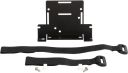
RF401, RF411, or RF416 Mounting Kit
Retired14201
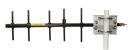
900 MHz 9 dBd Yagi Antenna with Mounting Hardware
Orderable14221
900 MHz 3 dBd Omnidirectional Antenna with Mounting Hardware
Orderable14204
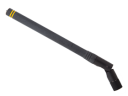
900 MHz 0 dBd 1/2 Wave Omnidirectional Antenna with RPSMA Connector
Orderable15731
900 MHz 0 dBd 1/4 Wave Omnidirectional Antenna with RPSMA Connector
Orderable15730
900 MHz 0 dBd 1/4 Wave Omnidirectional Antenna with RPSMA Connector
Orderable15970
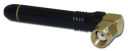
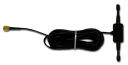
900 MHz 1 dBd Omnidirectional Dipole Antenna with Adhesive Mount
OrderableCOAXRPSMA
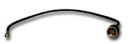
LMR195 Antenna Cable with Reverse Polarity SMA and Type N Pin (Male) Connector
OrderableCOAXNTN
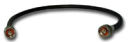
RG8 Antenna Cable with 2 Type N Pin (Male) Connectors
Orderable14462
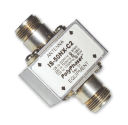
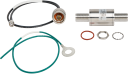
Surge Suppressor Kit for 900 or 922 MHz RSPMA Spread-Spectrum Radios
End of life21212
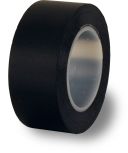
Black Cold Shrink Tape
Orderable18663
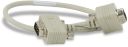
Null Modem Cable, 9-Pin PIn (Male) to 9-Pin Pin (Male)
Orderable14413
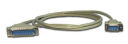
RS-232 Cable, DB9 Pin (Male) to DB25 Pin (Male)
End of life31314
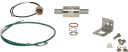
Surge Protection Kit, Type N to RPSMA, 700 to 2700 MHz
Orderable31312
Bulkhead Surge Protection Installed in Enclosure, Type N to RPSMA, 700 to 2700 MHz
Retired16987
Peripheral Mounting Kit
Orderable

Ships With
(2)- Orderable
- SC12
