RF452
RF452
OrderableConfigurableGSA900 MHz 1 W Spread-Spectrum Radio
Up to 15-to-20-mile range in idea conditions.
Pricing
Configuration
Sign in for option pricing- for use in US/Canada (Ships as 40389, 16675, & 17648)**RF452-NA
- AUS for use in Austriala (Ships as 40753, 16675, & 17648)RF452-AU
Select a configuration to add to your quote
- Model:
- RF452
- Item Number:
- RF452
- Warranty:
- 1 year
- Lead time:
- 21 days
Overview
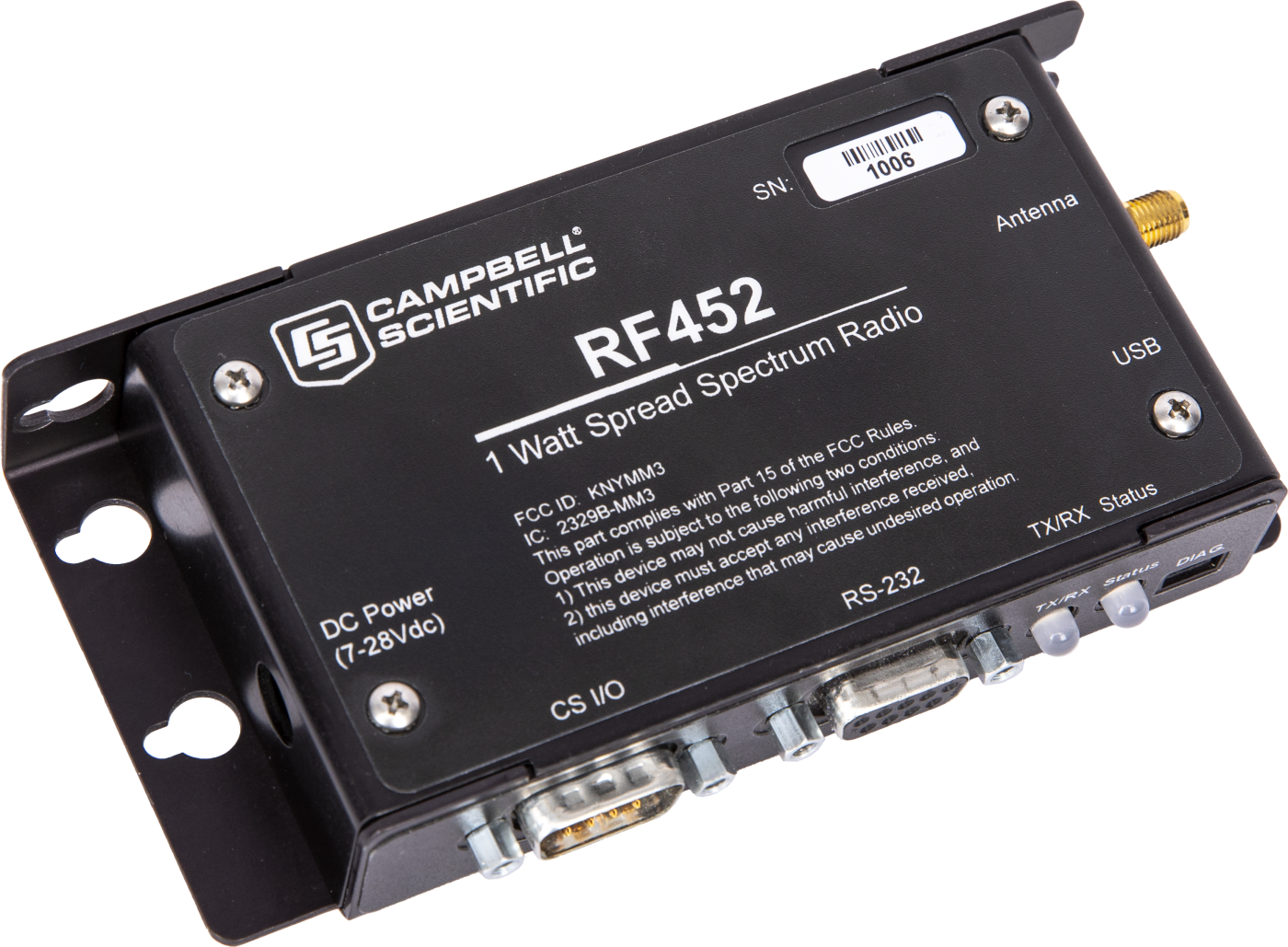
The RF452 is a powerful 900 MHz serial radio that is well suited for wireless networking with PakBus data loggers that are located miles apart. The RF452 is a 902 to 928 MHz frequency-hopping spread-spectrum radio. The radio features high noise immunity, fast serial data transfer speeds, and the maximum transmit power allowed by the FCC in an effort to provide reliable, hassle-free operation.
Constructing a network using RF452 radios is a simple, easy-to-do configuration process. To construct a network, connect one radio to a PC and configure it as the gateway radio. Then connect a second radio to a data logger. The link can be treated as a high-speed, multi-drop serial connection.
Technical Description
The RF452 is a frequency-hopping spread-spectrum radio, capable of operating between 902 and 928 MHz and transmitting up to 1 Watt (30 dBm). The specific frequencies used may be selected when operating outside the US and Canada to meet local regulations. Additionally, the RF power output may be adjusted to as low as 10 mW via software.
Typical communication distances are greater than four miles with up to 60 miles achievable under ideal conditions. Extended communication distances are possible using repeaters.
The operating frequency band of this radio modem may be shared with other non-licensed services such as cordless telephones and with licensed services including emergency broadcast and air-traffic control.
The RF452 consists of a radio module manufactured by FreeWave Technologies and a Campbell Scientific interface board. It reduces susceptibility to RF interference from other spread-spectrum devices by providing user-selectable frequency-hopping patterns. Spread-spectrum radios spread the normally narrowband information signal over a relatively wide band of frequencies. This process allows communications to be more immune to noise and other interference.
RF452 radios, as well as all FCC Part 15 devices, are not allowed to cause harmful interference to licensed radio communications and must accept any interference that they receive. Most Campbell Scientific users operate in open or remote locations where interference is unlikely. If there is a problem, interference can be reduced using methods such as moving the device, reorienting, using a different type of antenna, or adding RF shielding.
Powering the Radio
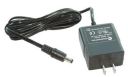
At least two radios are required to create a link. The radio may be powered through the DC barrel connector or via a CS I/O connection. When AC power is available, the 15966 wall charger is commonly used. At remote sites, the RF452 typically is powered through the CS I/O or the 14291 field cable.
Antennas
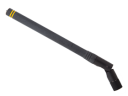
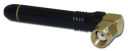
Campbell Scientific offers a variety of antennas for this radio. The 14204 is a 0 dBd, 1/2 wave omnidirectional whip antenna that connects directly to the radio (no cable required) and can transmit short distances (up to 1 mile). The 15970 dipole antenna includes adhesive for window or wall mounting and a cable for connecting to the radio.
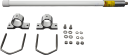
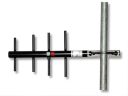
Our higher gain 14221 omnidirectional and 14205 Yagi antennas require a cable to connect them to the radio. The 31314 surge protector is available for radios susceptible to lightning or electrostatic buildup or when the cable length needs to be longer than 3 m (10 ft), as measured between the transceiver and the antenna.
Benefits
- Does not require individual operational license in the United States, Canada, New Zealand, and Australia
- Long-distance, high-speed, serial communication with battery-operated stations
- Each radio capable of performing gateway, remote, or repeater role
- Remote diagnostics and setup possible with diagnostics cable and software
- Compatible with existing RF450, RF451, and FreeWave FGR radio networks
Specifications
- Radio Type
- Frequency Hopping Spread Spectrum (FHSS)
- Frequency
- 902 to 928 MHz
- Country Used In
- US, Canada, New Zealand, Australia
- Power Output
- 10 to 1,000 mW
(user-selectable)
- Transmission Distance
- -Note- Transmission distance assumes line-of-sight and appropriate antenna. Line-of-sight obstructions, RF interference, and antenna type will affect transmission distance.
- Transmission Distance
- 20.92 to 96.56 km (13 to 60 mi) depending on antenna and line-of-sight
- Modulation
- 2 level GFSK
- RF Data Rate
- 115.2 or 153.6 kbps
(selectable speeds)
- Occupied Bandwidth
- 142 kHz
(applicable to FCC ID KNYMM3)
- Hopping Patterns
- 15 per band, 105 total
(user-selectable)
- Hopping Channels
- 50 to 110
(user-selectable) applicable to FCC ID KNYMM3
- Channel Spacing
- 230.4 kHz
- Frequency Zones
- 16
- Receiver Sensitivity
- -108 dBm at 115.2 kbps
(for 10-4 BER)
- Receiver Sensitivity
- -103 dBm at 153.6 kbps
(for 10-4 BER)
- IF Selectivity
- 40 dB
(at fc ± 230 kHz)
- Receiver Selectivity
- 50 dB
(at 896 MHz, 935 MHz)
- Error Detection
- 32-bit CRC
(retransmit on error)
- Data Encryption
- Proprietary spread-spectrum technology
- Link Throughput
- 115.2 kbps
(maximum)
- RF Connector
- Reverse Polarity SMA (RPSMA) jack
(external antenna required)
- CS I/O
- DB9 M, SDC 7/8/10/11 device
- RS-232
- DB9 F, DCE
- Operating Temperature Range
- -40° to +85°C
- Relative Humidity
- 0 to 95% RH
(non-condensing)
- Compliance Information
- KNYMM3
(FCC ID)
- Compliance Information
- 2329B-MM3
(Industry Canada ([IC])
- Average Current Drain (@ 12 Vdc)
- 650 mA
(transmit)
- Average Current Drain (@ 12 Vdc)
- 40 mA
(receive)
- Average Current Drain (@ 12 Vdc)
- 15 mA
(idle)
- Average Current Drain (@ 12 Vdc)
- 6 mA
(sleep)
- Communication Ports
- RS-232 9 pin D socket (female)
- Communication Ports
- CS I/O 9 pin D pin (male)
- Communication Ports
- USB Type B jack
- Service Requirements
- Shares frequency with other devices.
Must not cause harmful interference to licensed radios. Requires line-of-sight.
- Dimensions
- 13.61 x 2.74 x 7.01 cm
(5.36 x 1.08 x 2.76 in.)
- Weight
- 0.18 kg
(0.4 lb)
Power
- Input Voltage
- 7 to 28 Vdc
- Powered Over
- CS I/O or barrel plug
- Connector
- Barrel plug, center positive 12 V
(used to connect the 14291 Field Power Cable or 15966 AC adapter)
USB
- -NOTE-
- Used for connection to computer for network communications or device configuration.
Does not supply enough power for normal operation; RF452 must be powered through DC barrel plug or CS I/O.
- Type
- USB standard B
(device only)
Accessories
(11)14204
900 MHz 0 dBd 1/2 Wave Omnidirectional Antenna with RPSMA Connector
Orderable14221
900 MHz 3 dBd Omnidirectional Antenna with Mounting Hardware
Orderable14205
900 MHz 6 dBd Yagi Antenna with Mounting Hardware
Orderable14291
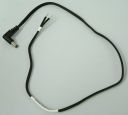
Field Power Cable, 12 Vdc Plug to Pigtail
Orderable15966
Wall Charger with Barrel Plug
Orderable15730
900 MHz 0 dBd 1/4 Wave Omnidirectional Antenna with RPSMA Connector
Orderable15731
900 MHz 0 dBd 1/4 Wave Omnidirectional Antenna with RPSMA Connector
Orderable18663
Null Modem Cable, 9-Pin PIn (Male) to 9-Pin Pin (Male)
Orderable32016
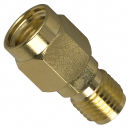
Coaxial Adapter, SMA Jack to RPSMA Plug
Orderable31312
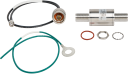
Bulkhead Surge Protection Installed in Enclosure, Type N to RPSMA, 700 to 2700 MHz
Retired40754
Four-Year Extended Warranty for the RF452
Orderable