P2546C
P2546C
OrderableConfigurableThree-Cup Anemometer with MEASNET Calibration (coil version)
Pricing
- Model:
- P2546C
- Item Number:
- 45081
- Warranty:
- 1 year
- Lead time:
- 14 days
Overview
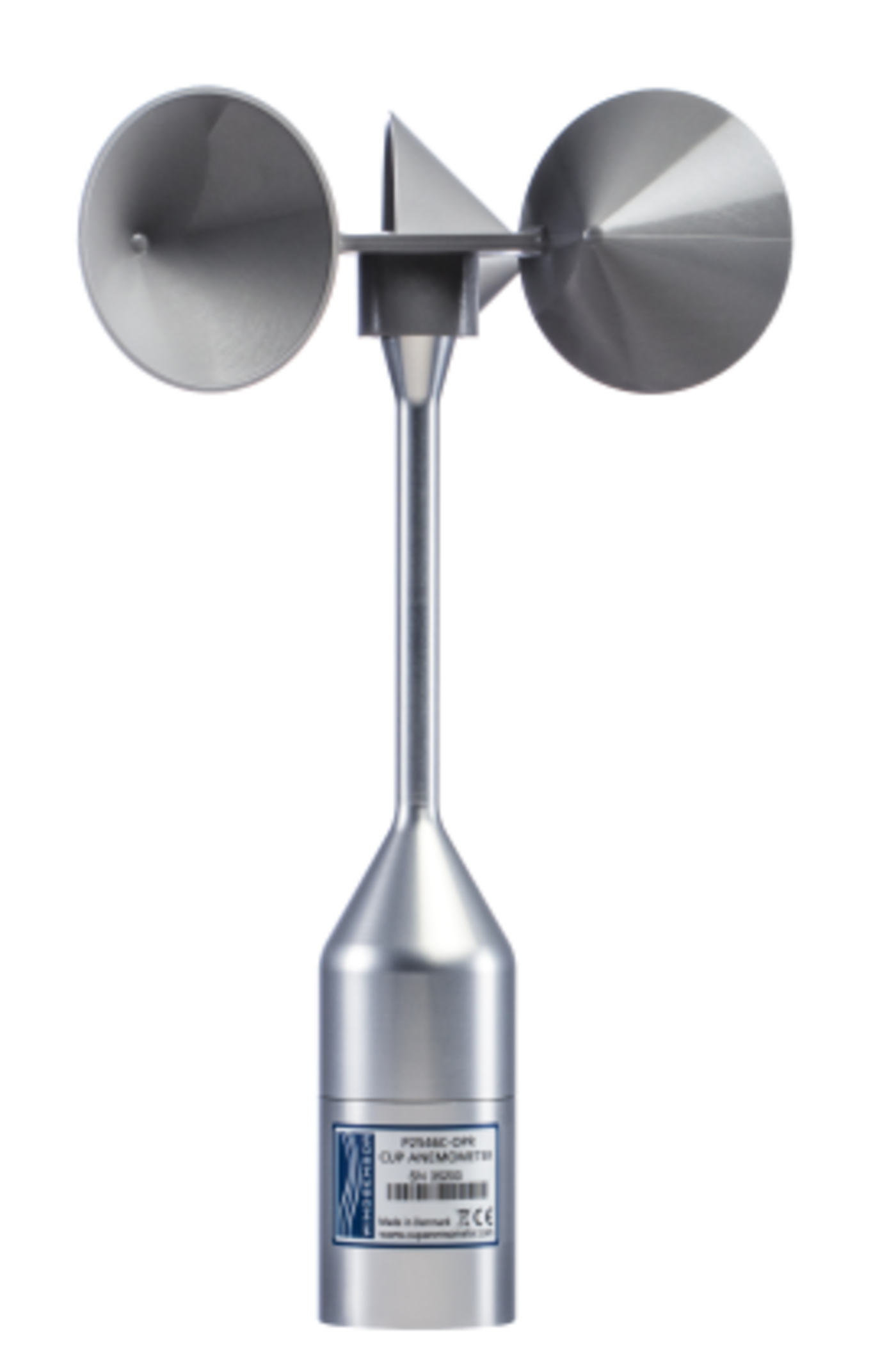
The P2546C, manufactured by WINDSENSOR, is a Class 1 cup anemometer commonly used in wind resource assessment and power performance applications. Each anemometer is individually calibrated compliant with IEC 61400-12-1 and is shipped with a MEASNET calibration certificate. The P2546C features a durable construction and is suitable for both on-shore and off-shore environments. The “C” version of this sensor (coil version) contains no mercury and is compatible with all Campbell Scientific measurement and control data loggers.
The P2546A (reed switch version) and P2546D (electronic version) are also available.
Key Advantages
Ideal for wind-energy applications
Benefits
- One-piece rotor anemometer head (OPR)
- Durable construction with anodized aluminum and stainless steel
- Low threshold speed
- Short distance constant
- Negligible overspeeding
- Angular response independent of wind speed
- Fully tested temperature performance
- Symmetrical geometry
- No external power source
- MEASNET calibrated
Specifications
- Sensor
- 3-cup anemometer
- Measurement Description
- Wind speed
- Range
- 0 to 70 m/s
- Starting Threshold
- < 0.4 m/s
- Starting Speed
- 0.27 m/s
- Gain
- 0.6201 m
- Distance Constant
- λ0 = 1.81 ± 0.04 m
- Standard Deviation of Offset
- 0.014 m/s
- Standard Deviation of Gain
- 0.027 m
- Variation among Units
- ±1%
- Non-Linearity
- < 0.04 m/s
- Temperature Influence
- < 0.05 m/s
(-15° to +60°C)
- -NOTE-
- The specifications are based on 80 wind tunnel calibrations performed according to the Measnet Cup Anemometer Calibration Procedure.
The specified offset and gain figures represent the mean values of these calibrations. Variation among units designates the maximum deviation of any unit from the straight line representing these mean values. All units are run-in for 225 hours at 9 ms-1, in order to reduce the initial bearing friction to a level close to the steady state value. After run-in, bearing friction is tested at -15°C and at room temperature. The allowed limits for this test assure that the temperature influence on the calibration is within the specified limit.
Calibration
- Standard
- U=A0+B0×f
- Wind Speed
- U [m/s]
- Offset
- A0=0.27 m/s
("starting speed")
- Gain
- B0=0.620 m
- Output Frequency
- f [Hz]
Switching Characteristics
- Signal Type
- Potential free contact closure
- Duty Cycle
- 40% to 60%
- Maximum Switching Voltage
- 30 V
- Maximum Recommended Switching Current
- 10 mA
- Series Resistance
- 330 Ω, 1 W
- Operating Temperature Range
- -35° to +60°C