CNR4
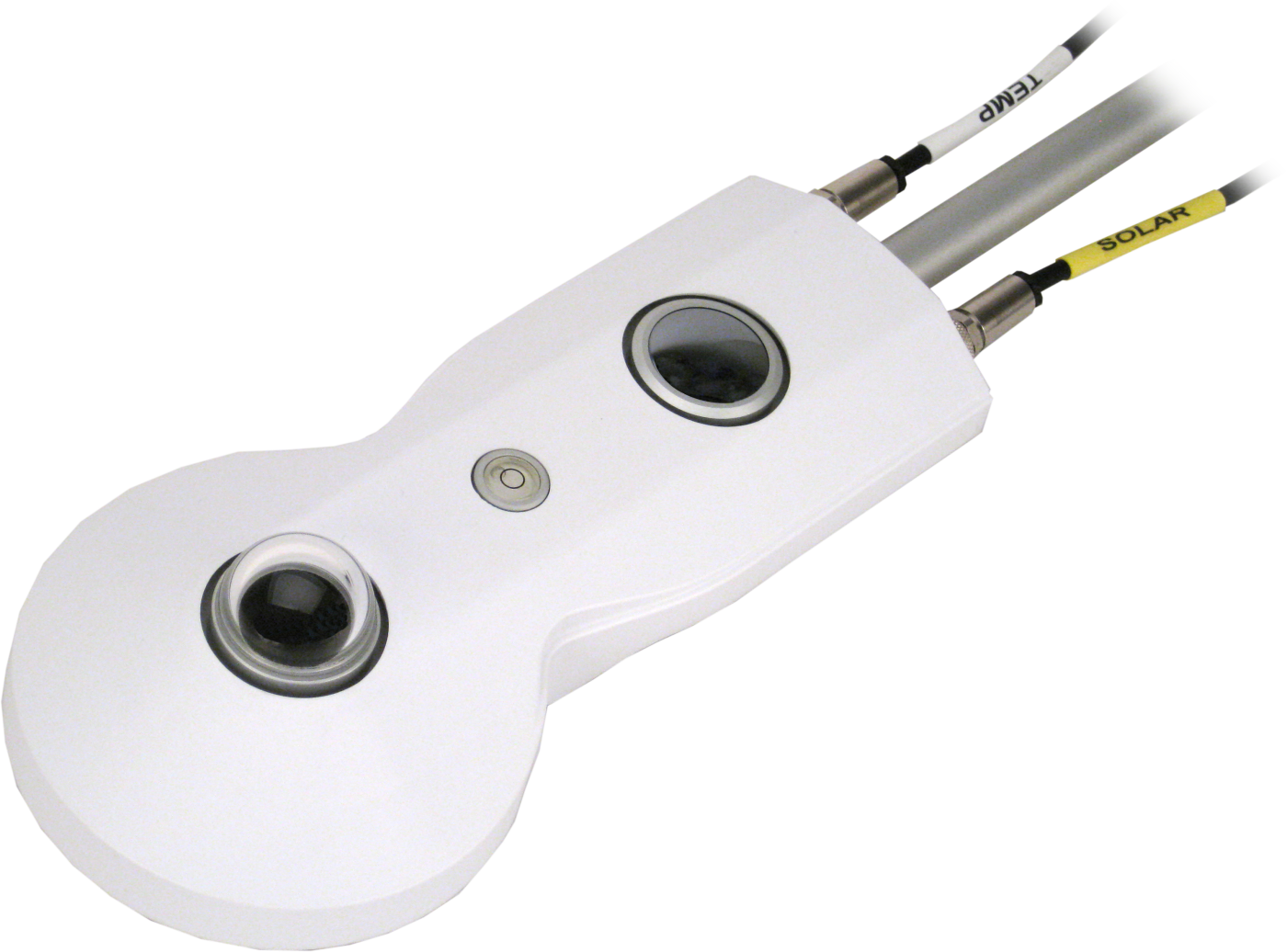
CNR4
OrderableConfigurable4-Component Net Radiometer
Pricing
- Model:
- CNR4
- Item Number:
- 45148
- Warranty:
- 2 years
- Lead time:
- 14 days
Overview
The CNR4, manufactured by Kipp & Zonen and cabled for use with Campbell Scientific data loggers, is a research-grade net radiometer that measures the energy balance between incoming and outgoing radiation. Our data loggers measure the CNR4's output. This net radiometer offers a professional solution for scientific-grade energy balance studies.
Key Advantages
Four-way, research-quality radiometer; thermistor and Pt-100 built in
Technical Description
The CNR4 consists of a pyranometer and pyrgeometer pair that faces upward and a complementary pair that faces downward. The pyranometers and pyrgeometers measure shortwave and long-wave infrared radiation, respectively.
The upper long-wave detector of the CNR4 has a meniscus dome that allows water droplets to easily roll off of it. The dome shape also increases the field of view to nearly 180° instead of 150° for a flat window.
The CNR4 contains both an internal thermistor and an internal Pt-100 RTD. Typically, the thermistor makes the instrument housing temperature measurements used to compensate the infrared readings. Alternatively, the RTD can provide these measurements if a CR3000 or CR5000 datalogger is used.
The CNR4 has a solar shield that reduces the thermal effects on both the short-wave and long-wave measurements. A drying cartridge helps keep the radiometer’s electronics dry. The CNF4, an optional ventilation unit with heater, can be fitted onto the CNR4 to minimize the formation of dew as well as melt frost.
Benefits
- Research-grade performance
- Meniscus dome on upper long-wave detector allows water droplets to easily roll off of it and increases field of view to nearly 180°
- Internal temperature sensors provide temperature compensation of measurements
- Drying cartridge helps keep the electronics dry
- Compatible with the CNF4 ventilation unit with heater that reduces formation of dew and melts frost
- Separate outputs of short-wave and long-wave infrared radiation for better accuracy and more thorough quality assurance
- Solar shield reduces thermal effects on the sensors
Specifications
- Sensor
- Two thermopile pyranometers, two pyrgeometers, Pt100 RTD, and thermistor
- Measurement Description
- Measures incoming and outgoing short-wave and long-wave radiation
- Response Time
- < 18 s
- Temperature Dependence of Sensitivity
- < 4%
(-10° to +40°C)
- Sensitivity
- 5 to 20 μV W-1 m2
- Non-Linearity
- < 1%
- Tilt Error
- < 1%
- Directional Error
- < 20 W m-2 (pyranometer)
Angles up to 80° with 1000 W/m2 beam radiation - Operating Temperature Range
- -40° to +80°C
- Compliance
- Conforms to the CE guideline 89/336/EEC 73/23/EEC.
- Height
- 6.6 cm
(2.6 in.) dome-to-dome
- Width
- 11.1 cm
(4.4 in.)
- Length
- 23.5 cm
(9.3 in.)
- Length
- 40.4 cm
(15.9 in.) with CNF4
- Weight
- 850 g
(30.0 oz) without cable
Pyranometer
- Spectral Range
- 305 to 2800 nm
- Uncertainty in Daily Total
- < 5%
(The uncertainty values are for a 95% confidence level.)
- Output Range
- 0 to 15 mV
(The output range is typical for atmospheric applications.)
Pyrgeometer
- Spectral Range
- 4500 to 42,000 nm
- Uncertainty in Daily Total
- < 10%
(The uncertainty values are for a 95% confidence level.)
- Output Range
- ±5 mV
(The output range is typical for atmospheric applications.)
Related Resources
Case Studies
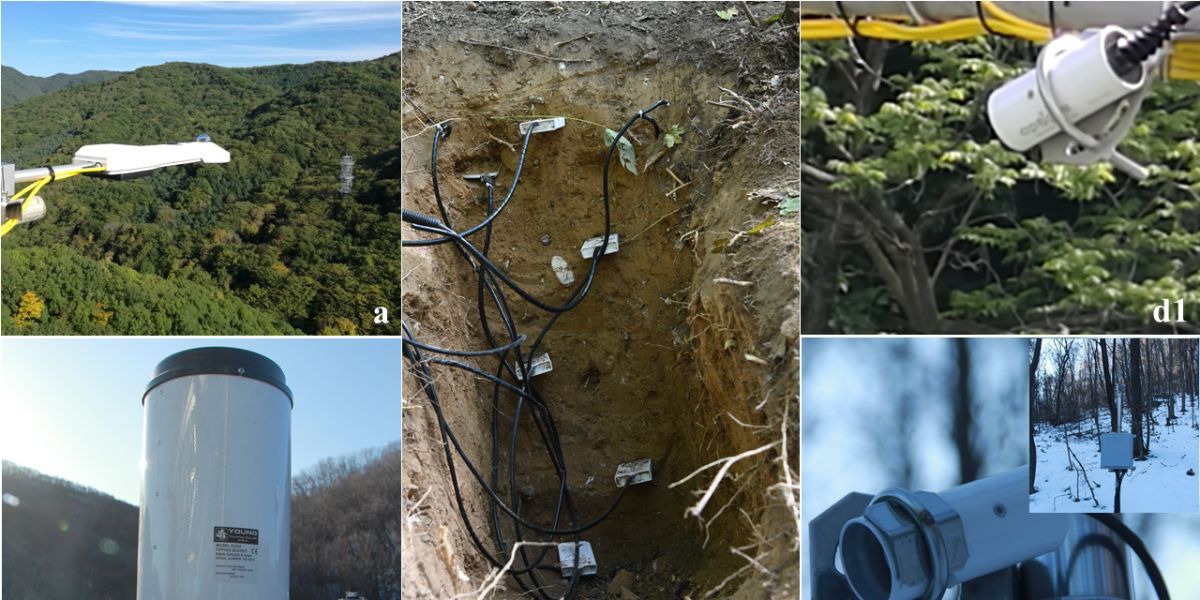
China: Flux Cooperation
Flux studies over mountain forests (heterogeneous landscapes)
Northeast China
March 8, 2019
View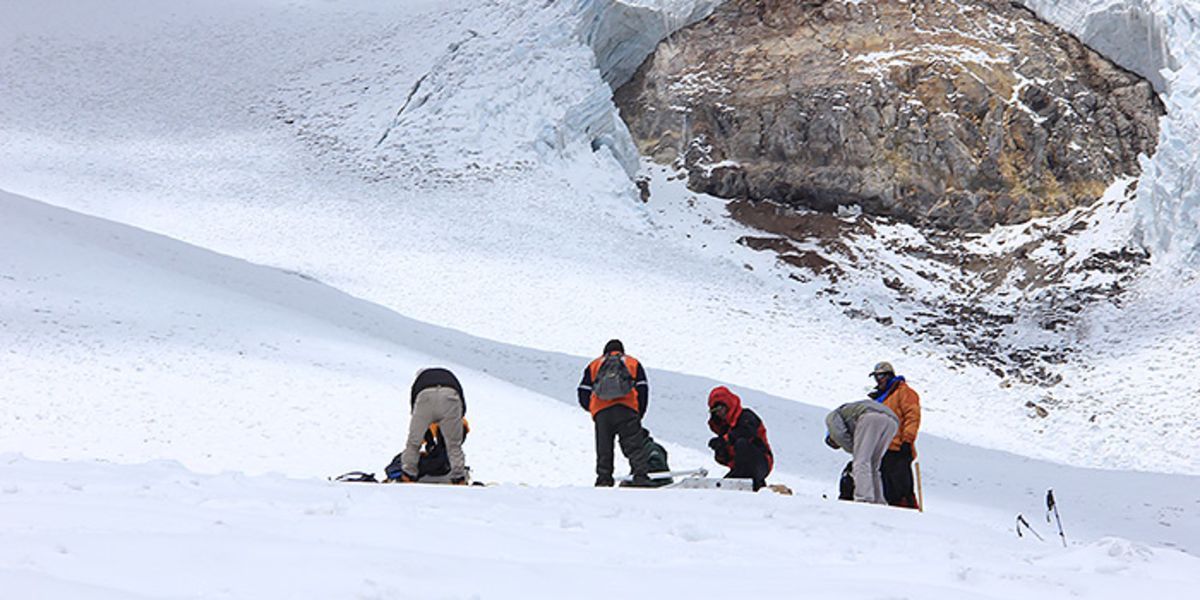
Peru: High-Elevation Weather on Glaciers
Glacier monitoring
Andes Mountains, Peru
March 25, 2015
View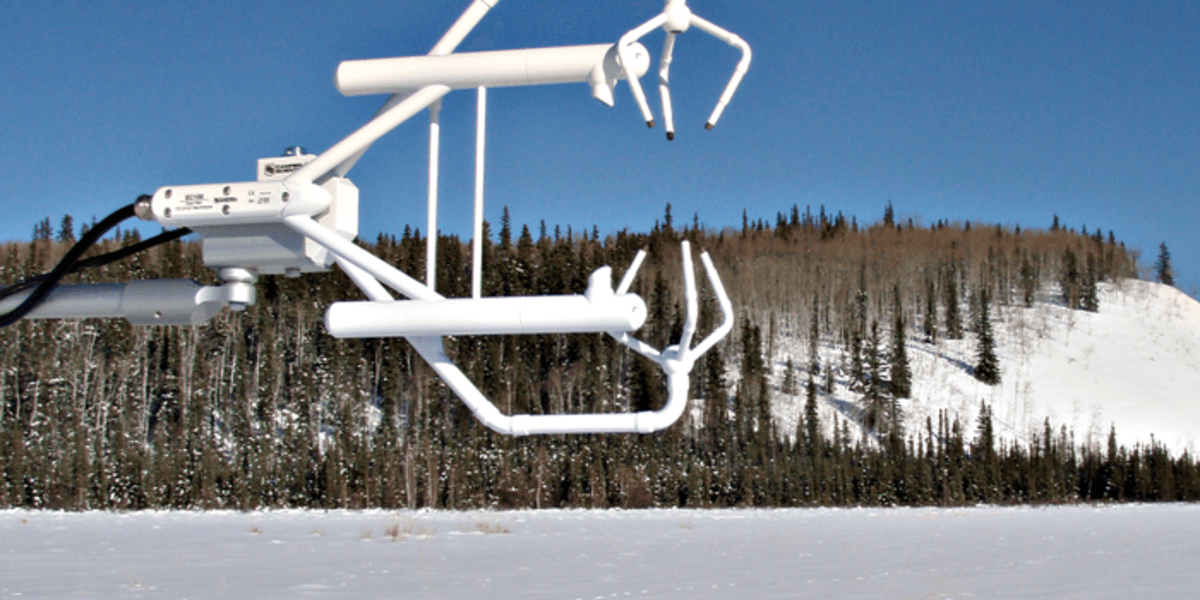
Alaska: Eddy Covariance
Measuring eddy-covariance fluxes in cold-climate forest
Bonanza Creek Experimental Forest (a National Science Foundation Long-Term Ecological Research site in the Alaska interior)
June 19, 2013
View