CS120A
CS120A
OrderableConfigurableGSAAtmospheric Visibility Sensor
High-performance visibility measurements. Competitive price.
Pricing
Configuration
Sign in for option pricing- 25 to +60C w/5m (17ft) per Sensor**CS120A-ST-5m
- 25 to +60C w/10m (33ft) per SensorCS120A-ST-10m
- 25 to +60C w/15m (50ft) per SensorCS120A-ST-15m
- 25 to +60C w/30m (100ft) per SensorCS120A-ST-30m
- 40 to +70C w/5m (17ft) per SensorCS120A-XT-5m
- 40 to +70C w/10m (33ft) per SensorCS120A-XT-10m
- 40 to +70C w/15m (50ft) per SensorCS120A-XT-15m
- 40 to +70C w/30m (100ft) per SensorCS120A-XT-30m
Select a configuration to add to your quote
- Model:
- CS120A
- Item Number:
- CS120A
- Warranty:
- 2 years
- Lead time:
- 21 days
Overview
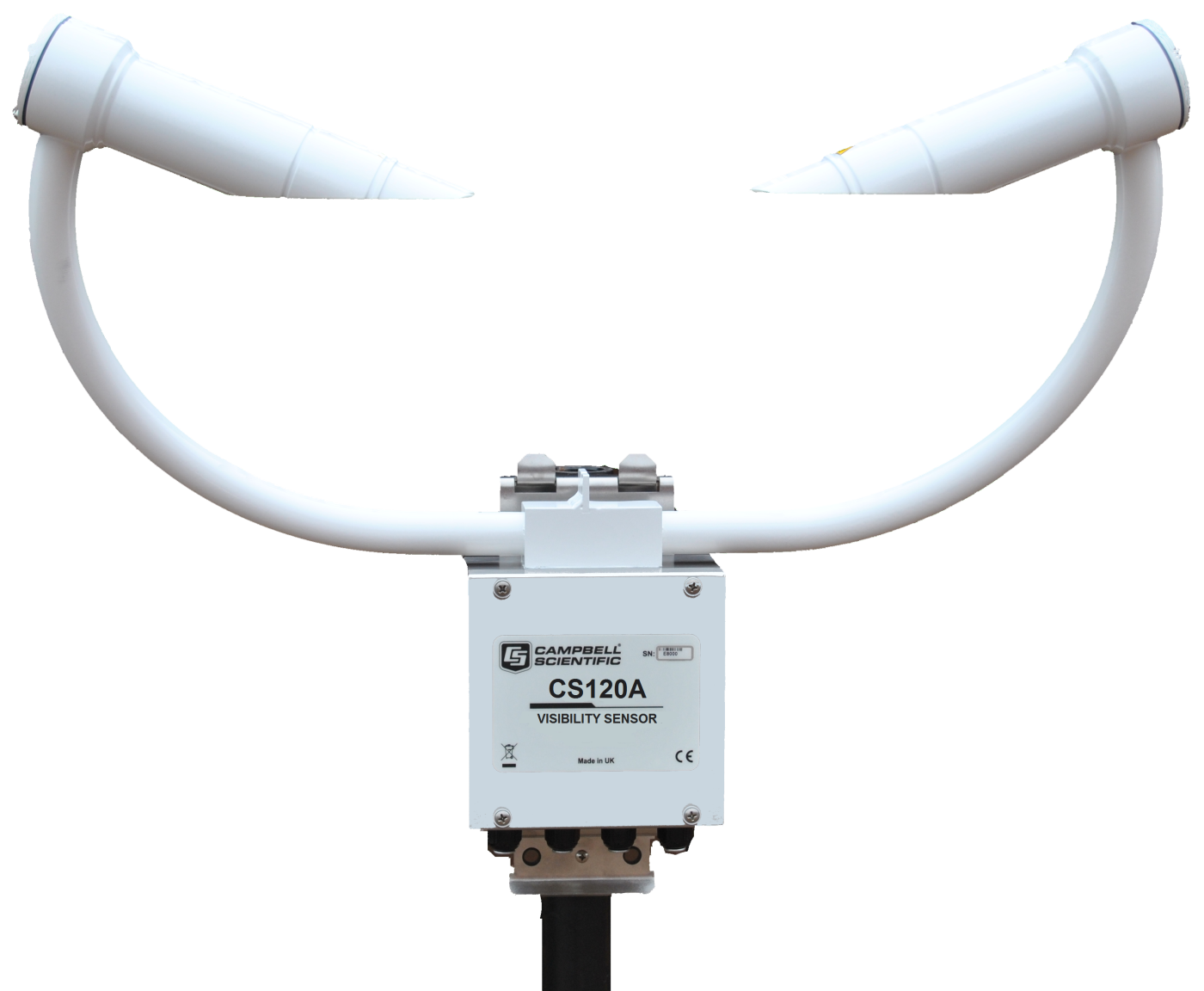
The CS120A uses tried-and-tested, infrared forward-scatter technology, and it uses the proven 42° scatter angle to report meteorological observable range (MOR) for fog and snow in the range of 5 to 75,000 m (16.4 to 246,063 ft). It combines a high specification with a very competitive price. The CS120A is ideal for stand-alone applications or in combination with automatic weather stations in road, aviation, solar-energy, and wind-energy environments.
For aviation applications, users can be assured that the CS120A complies with UK CAA, FAA, and ICAO guidance and meets or exceeds all recommendations and specifications. (This includes CAP437, CAP670, and CAP746.)
The CS120A is certified by Deutscher Wetterdienst as suitable for use to control wind turbine obstruction light systems as specified by 506/04, General Administrative Rules for the Identification of Aircraft Obstructions.
Key Advantages
Competitive price
Technical Description
Compared to many such sensors, the CS120A design means that visibility is being measured in a relatively clean space because the position of the heads and body minimize disturbance of the airflow at the measurement volume.
The CS120A uses continuous high-speed sampling, which improves the accuracy of the measurements taken during mixed weather such as rain and hail, while providing reliable readings during more stable events such as fog and mist. High-speed sampling also allows the sensor to better respond to suddenly changing conditions.
The CS120A has several design features that keep its optics clean. Downward-facing optics minimize dirt and snow buildup. Low-powered heaters prevent the formation of dew, and a higher-powered heater prevents the formation of ice.
The sensor is very power efficient, drawing just 3 W during normal operation including the dew heaters; power can be reduced further by reducing the sample rate and manual control of the heaters.
Two configurable alarm outputs are provided and, via relays, these can drive external warning systems such as lights and foghorns. They can also be used to switch the intensity of wind turbine warning lights depending upon current visibility levels.
Benefits
- High performance sensor at a competitive price
- Sensor design minimizes airflow disruption at measurement volume
- Incorporates automatic dew and hood heaters for all-weather operation
- Simple field calibration using optional calibration kit
- Low power—suitable for remote application
- Automatic status check for faults or window contamination
- Type certified for aviation use by the German Meteorological Service, Deutscher Wetterdienst (DWD)
Specifications
- Signal Type/Output
- RS-232, RS-485
- Measurement Description
- Meteorological Observable Range
(MOR)
- Maximum Reported Visibility
- 100 km
(62.1 mi)
- Minimum Reported Visibility
- 5 m
(16.4 ft)
- Accuracy
- ±8% at < 600 m
(< 1968.5 ft)
- Accuracy
- ±10% at 600 to 10,000 m
(1968.5 to 32,808.4 ft)
- Accuracy
- ±15% at 10,000 to 15,000 m
(32,808.4 to 49,212.6 ft)
- Accuracy
- ±20% at 15,000 to 75,000 m
(49,212.6 to 246,063 ft)
- Resolution
- 1 m
(3.3 ft)
- Mounting
- Stainless-steel V-bolt bracket that attaches to a pole with a 32 to 52.5 mm (1.25 to 2 in.) outer diameter
- Electronics Supply Voltage
- 7 to 30 Vdc
- Total Unit Power
- < 3 W while sampling continuously
(including dew heaters)
- Standards
- Frangible masts are available to customer requirements to meet ICAO recommendations (typically placing the sample volume at 2.5 m [8.2 ft]).
- Sensor Dimensions
- 540 x 640 x 246 mm
(21.26 x 25.2 x 9.7 in.) including mount
- Sensor Weight
- ~3 kg
(6.6 lb) depending on mounting system
Optical/Pulse
- LED Center Wavelength
- 850 nm
- LED Spectral Bandwidth
- ±35 nm
- Light Pulse Rate
- 1 kHz
Environmental
- Operating Temperature Range
- -25° to +60°C
(standard)
- Extended Operating Temperature Range
- -40° to +70°C
(This extended version is available as a special. Contact Campbell Scientific for more information.)
- Operating Humidity Range
- 0 to 100%
- Sensor Sealing
- Rated to IP66
- Wind Speed
- Up to 60 m s-1
- Sensor Heater Threshold
- < 35°C
(dew heater on)
- Sensor Heater Threshold
- > 40°C
(dew heater off)
- Sensor Heater Threshold
- < 5°C
(hood heater on)
- Sensor Heater Threshold
- > 15°C
(hood heater off)
DSP & Dew Heaters
- Power
- 2 x 0.6 W
(total of 1.4 W) for dew heater
- Typical Current Consumption @ 12 Vdc
- 200 mA
(continuous sampling, dew heaters active)
- Typical Current Consumption @ 12 Vdc
- 110 mA
(continuous sampling, dew heaters disabled)
- Typical Current Consumption @ 12 Vdc
- 21 mA
(no sampling, dew heaters disabled)
- Typical Current Consumption @ 12 Vdc
- 200 mA
(dew heaters active, RS-232 communications)
Hood Heater
- Supply Voltage
- 24 V dc or ac
- Power
- 2 x 30 W
(total of 60 W)
Interface
- Serial Interface
- RS-232 or RS-485, 8 bit data bytes, 1 stop bit
- Serial Data Rates
- 1200 to 115,200 bps
(38,400 bps default rate)
Accessories
(7)44157
3.8 A 24 V NEC Class 2 Power Supply Kit
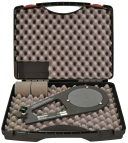
Orderable40062
High-Grade Calibration Kit for CS120/A or CS125
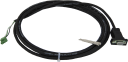
Orderable28680
Configuration Cable for CS120/A or CS125
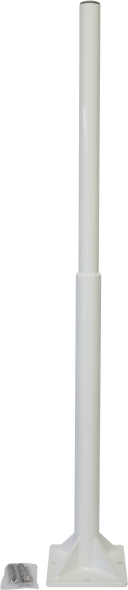
Orderable28679
Optical Sensor Mount for CS120/A or CS125
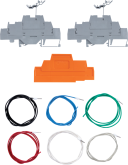
Retired39131
DIN Rail Terminal Kit with 2 Terminals and 6 Wires
Orderable39802
DIN Rail Terminal Kit with 4 Terminals and 9 Wires
Orderable40062
High-Grade Calibration Kit for CS120/A or CS125
Orderable
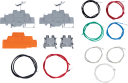
Ships With
(2)- 5 m Sensor Cable from original mfg
- 5 m Hood Heater Cable from original mfg