ClimaVue 50
ClimaVue 50
RetiredConfigurableCompact Digital Weather Sensor
Best for general applications.
Pricing
- Model:
- ClimaVue 50
- Item Number:
- 34346
- Warranty:
- 1 year
- Lead time:
- 14 days
Overview
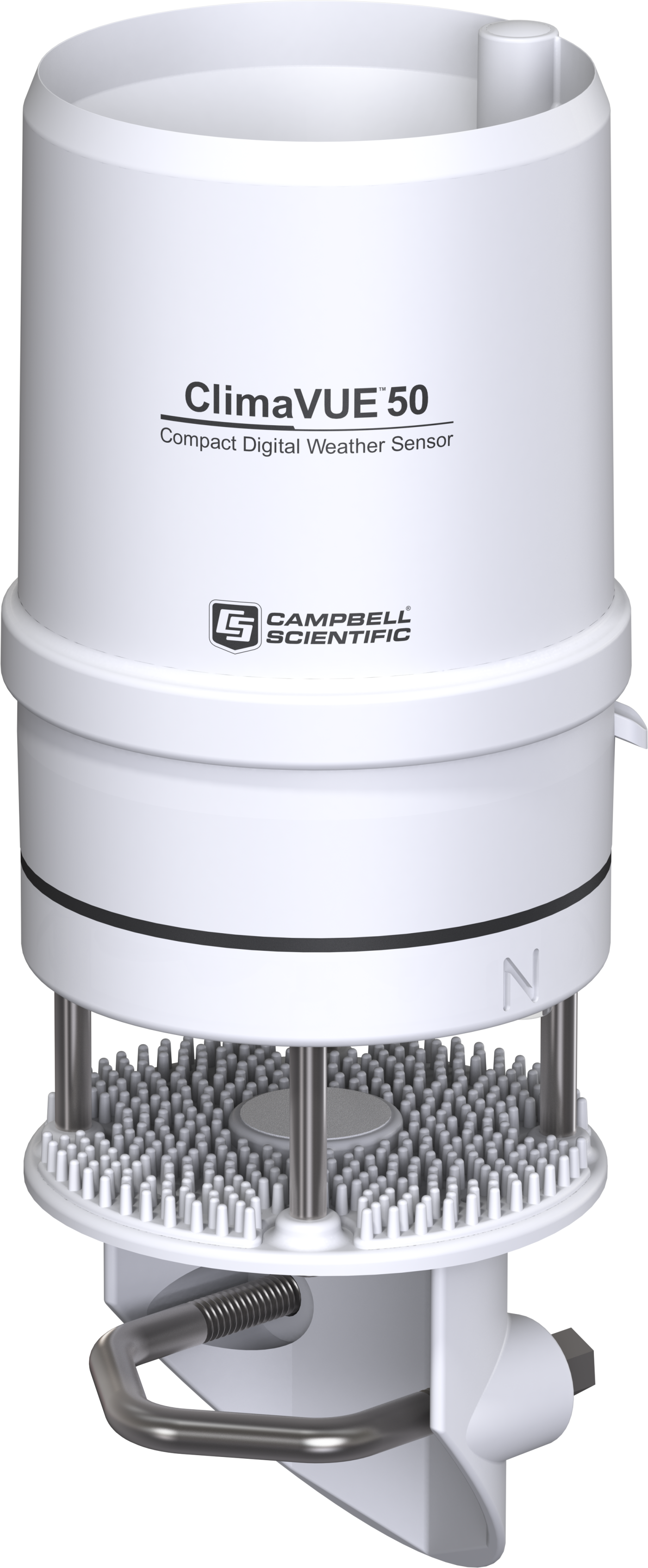
The ClimaVue™50 is an affordable all-in-one meteorological sensor that fulfills your common weather monitoring needs with simplicity, when paired with any of Campbell Scientific's highly flexible and scalable data collection platforms. This sensor uses SDI-12 to report air temperature, relative humidity, vapor pressure, barometric pressure, wind (speed, gust, and direction), solar radiation, precipitation, and lightning strike (count and distance). It does this with no moving parts, while consuming little power. A built-in tilt sensor assures long-term data integrity. This diverse product is great for quick deployment, for remote locations, for large networks, as part of a more complex system, or if you just need something simple.
Key Advantages
Low power, compact, and simple for easy installation in remote locations
Technical Description
Sensors
All sensors are integrated into a single, small form-factor unit, requiring minimal installation effort. With a robust, no-moving-parts design that prevents errors because of wear or fouling, the ClimaVue 50 is ideal for long-term, remote installations.
Pyranometer
Solar radiation is measured by a pyranometer that is integrated into the lip of the rain gage funnel at the top of the ClimaVue 50. The miniature pyranometer uses a silicon-cell sensor to measure the total incoming (direct and diffuse) solar radiation. Silicon-cell sensors have excellent response time to changing radiation conditions and acceptable sensitivity across the solar spectrum, which make them well-suited for use on the ClimaVue 50.
A carefully developed cosine-correcting head ensures accurate readings regardless of sun angle, while the painstakingly researched optical filter material balances cost and performance to ensure the silicon-cell provides the ClimaVue 50 with good accuracy regardless of temperature or sensor age.
Anemometer
The space underneath the rain gage is where the ClimaVue 50 measures wind speed. Ultrasonic signals emitted from transducers at right angles to each other bounce off the porous sintered glass plate and back up to the opposite sensor. The speed of sound is affected by the wind, and the wind speed is calculated by measuring differences in the time it takes for sound to travel from the transmitters to the receivers.
Temperature Sensor
The ClimaVue 50 temperature measurement is made in the center of the anemometer area where a small stainless-steel needle containing a tiny temperature sensor (thermistor) extends from the middle of the four sonic transducers in the center of the anemometer.
Unlike most air temperature measurements, the temperature sensor is not covered with louvered plates to protect it from solar heating. Instead, it sits in open air, susceptible to solar heating of the instrument body. However, the ClimaVue 50 accurately corrects the measured air temperature because solar radiation and the wind speed are known. These two are the main variables that determine the error between measured air temperature and the actual air temperature. An energy balance equation is then used to calculate what the actual temperature should be to an accuracy of ±0.6°C.
For more information, see the "ClimaVUE™50—Correction of air temperature measurements from a radiation-exposed sensor" technical paper.
Relative Humidity Sensor
The relative humidity sensor on the ClimaVue 50 is located behind the circular Teflon™ screen close to the sonic transducers. The Teflon screen protects the sensor from liquid water and dust while allowing water vapor to freely pass to the sensor. The ClimaVue 50 measures relative humidity and temperature and computes vapor pressure.
Drip Counter Rain Gage
The ClimaVue 50 contains a 9.31 cm (3.67 in.) diameter rain-collection funnel. A spring in the funnel acts as a filter to keep out large particles while allowing enough flow so water does not back up. Rain collected by the funnel exits the funnel through a precision flared hole that forms the rain into drops of a known size. The falling drops hit and momentarily bridge the gap between two gold pins, creating an electrical pulse.
The ClimaVue 50 counts the pulses (drops) and calculates the water volume. As the rain intensity increases, the drops become smaller, but the ClimaVue 50 firmware contains an algorithm to automatically compensate for drop size as the rain increases.
Note: This non-heated sensor is not suitable for solid precipitation measurements or riming environments.
Tilt Sensor
The ClimaVue 50 is also equipped with a tilt sensor. The primary use of the tilt sensor data is to ensure the ClimaVue 50 remains level at all times. Regularly check X and Y tilt data to ensure the ClimaVue 50 is level; if it has tilted, return to the site and level again. Three degrees off level can cause errors in the rain and solar radiation measurements. Although this sensor's readings may be used to level the instrument during installation, it is much easier to use the small bubble level on the bottom of the anemometer plate.
Mounting
The ClimaVue 50 includes a V-bolt for mounting to a pipe with a nominal outer diameter of 31.8 to 50.8 mm (1.25 to 2.0 in.). This allows the sensor to mount directly to a tripod mast or CM300-series mounting pole, or to a crossarm using the 17387 mounting pipe kit.
Benefits
- All the common meteorological measurements with one simple digital (SDI-12) output
- Less than 1 mA at 12 Vdc average current, making it ideal for solar-powered sites
- Integrated tilt sensor helps assure that the sensor stays level over time
- Low maintenance—no moving parts significantly reduces maintenance cost and time
- 304 stainless-steel hardware for minimal surface staining in marine environments
- No sensor configuration required
- Compact design for quick, low-impact installation
- Compatible with all modern Campbell Scientific data loggers
- Detachable cable facilitates field replacement
Specifications
- Measurements Made
- Air temperature, barometric pressure, lightning average distance, lightning strike count, precipitation, relative humidity, solar radiation, tilt, wind direction, and wind speed.
- Output
- SDI-12
- Operating Temperature Range
- -50° to +60°C
(Except the barometer and RH: -40° to +60°C.)
- Minimum Supply Voltage
- 3.6 Vdc continuous
- Maximum Supply Voltage
- 15.0 Vdc continuous
- Minimum Digital Input Voltage
- 2.8 V
(logic high)
- Minimum Digital Input Voltage
- -0.3 V
(logic low)
- Typical Digital Input Voltage
- 3.0 V
(logic high)
- Typical Digital Input Voltage
- 0.0 V
(logic low)
- Maximum Digital Input Voltage
- 5.5 V
(logic high)
- Maximum Digital Input Voltage
- 0.8 V
(logic low)
- Typical Current Drain @ 12 Vdc
- < 1 mA
(average)
- Typical Measurement Duration
- 110 ms
- Maximum Measurement Duration
- 3,000 ms
- Maximum Polling Frequency
- 10 s
- Application of Council Directive(s)
- 2014/30/EU: Electromagnetic Compatibility Directive
(EMC)
- Application of Council Directive(s)
- 2011/65/EU: Restrictions of Hazardous Substances Directive
(RoHS2)
- Application of Council Directive(s)
- 2015/863/EU: Amending Annex II of RoHS Directive 2011/65/EU: Phthalates Restrictions
(EU)
- Standards to Which Conformity Is Declared
- EN 61326-1:2013: Electrical equipment for measurement, control, and laboratory use—EMC requirements—for use in industrial locations
- Standards to Which Conformity Is Declared
- EN 63000:2018: Technical documentation for the assessment of electrical and electronic products with respect to the restriction of hazardous substances
- Connection Description
- 25 mm (10 in.) pigtail with M12 pin (male) 5-pin 316 stainless-steel knurl
- Diameter
- 10 cm
(4 in.) including rain gage funnel
- Height
- 34 cm
(13.4 in.) including rain gage funnel
- Weight
- 839.15 g
(1.85 lb)
Power Consumption
- Quiescent
- 0.3 mA
- Maximum Peak Current
- 33 mA
- Average Using the R7! Command every 10 s
- 1.0 mA
- Average Using the R7! Command every 60 s (or slower)
- 0.4 mA
Air Temperature
- Measurement Range
- -50° to +60°C
- Resolution
- 0.1°C
- Accuracy
- ±0.6°C
Relative Humidity
- Measurement Range
- 0 to 100%
- Resolution
- 0.1%
- Accuracy
- ±3% RH typical
(varies with temperature and humidity)
Barometric Pressure
- Barometer Operating Temperature Range
- -40° to +60°C
- Measurement Range
- 500 to 1100 hPa
- Resolution
- 0.1 hPa
- Accuracy
- ±1 mb
(over the range of -10° to +50°C)
- Accuracy
- ±5 mb
(over the range of -40° to +60°C)
Vapor Pressure
- Measurement Range
- 0 to 47 kPa
- Resolution
- 0.01 kPa
- Accuracy or Repeatability
- Varies with temperature and humidity; ±0.2 kPa typical below 40°C.
Wind Speed
- Wind Speed Maximum
- 10 s gust
- Measurement Range
- 0 to 30 m/s
(0 to 67 mph)
- Resolution
- 0.01 m/s
(0.02 mph)
- Accuracy or Repeatability
- 0.3 m/s or 3%
(0.67 mph or 3%), whichever is greater
Wind Direction
- Measurement Range
- 0° to 359°
- Resolution
- 1°
- Accuracy
- ±5°
Solar Radiation
- Measurement Range
- 0 to 1750 W m-2
- Resolution
- 1 W m-2
- Accuracy
- ±5% of measurement
(typical)
- Spectral Range
- 300 to 1150 nm
Precipitation
- Measurement Range
- 0 to 400 mm/h
(15.75 in./h)
- Resolution
- 0.017 mm
- Accuracy
- ±5% of measurement
(from 0 to 50 mm/h or 0 to 1.97 in./h)
Tilt
- Measurement Range
- -90° to +90°
- Resolution
- 0.1°
- Accuracy
- ±1°
Lightning Strike Count
- Measurement Range
- 0 to 65,535 strikes
- Resolution
- 1 strike
- Accuracy
- > 25% detection at < 10 km typical
(variable with distance)
Lightning Average Distance
- Measurement Range
- 0 to 40 km
(0 to 24.9 mi)
- Resolution
- 3 km
(1.86 mi)
- Accuracy
- Variable
Accessories
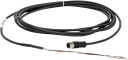
(7)VueCBL1
Vue Sensor Cable
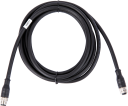
OrderableVueCBL2
24 AWG Extension Cable with Five-Pin to Eight-Pin M12 Connectors
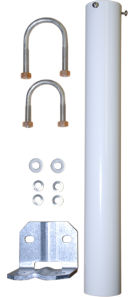
Orderable17387
ClimaVue, MetSens or WindSonic Mounting Pipe Kit
Orderable35048
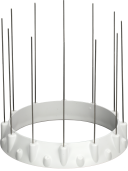
Bird Spike Kit for ClimaVue
Orderable33815
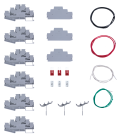
SDI-12 Terminal Bus Kit
Orderable39119
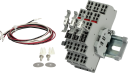
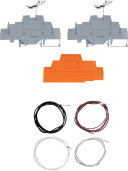
DIN Rail Terminal Kit with 2 Terminals and 4 Wires
Orderable39642
SDI-12 DIN Rail Terminal Bus Kit without Mounting Bracket
Orderable
Related Resources
Case Studies
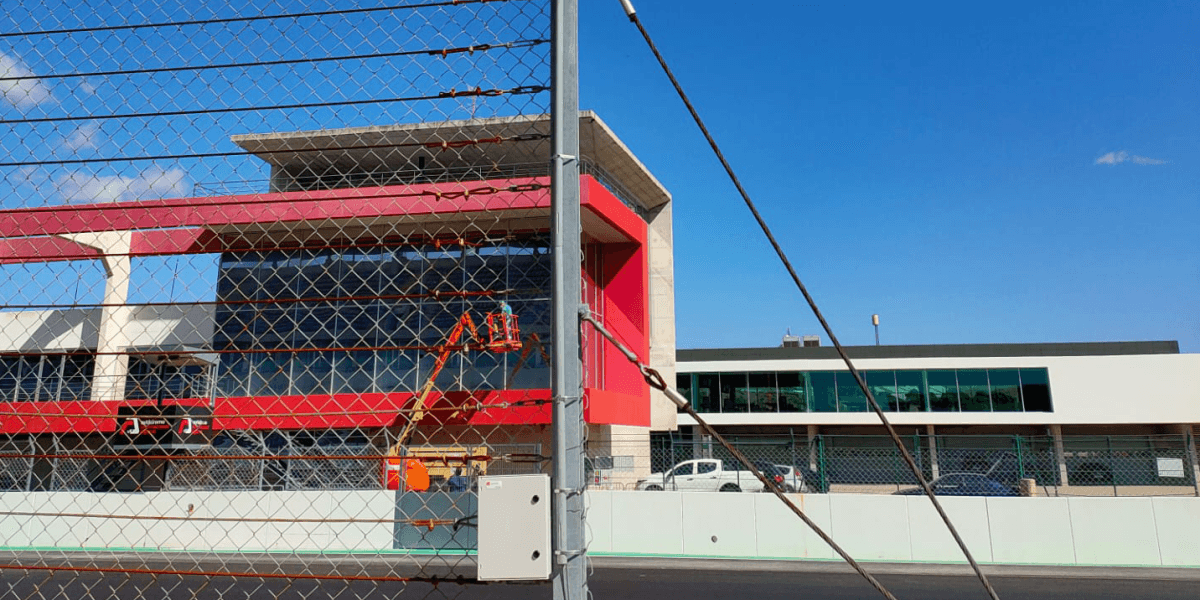
Portugal: Formula 1 Weather Monitoring
Weather and road condition reporting for nowcasting and forecasting
Portimão, Portugal
April 3, 2023
View
South Africa: Microclimate Analysis
Monitoring microclimatic resources
Western Cape, South Africa
July 29, 2022
View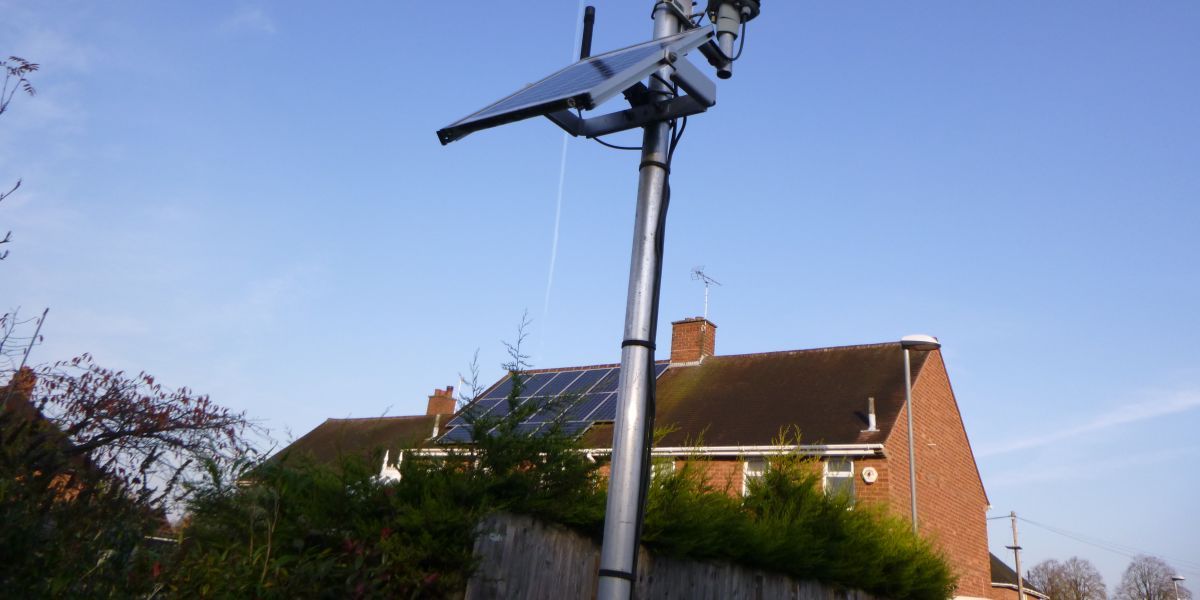
United Kingdom: Observing Urban Climate
Monitoring for early warnings and education
Birmingham, United Kingdom
August 13, 2021
View
Documents
- Compliance
ClimaVue 50 Certificate of Compliance EU RoHS
May 2018
View Document - Manual
ClimaVue 50 Product Manual (online)
August 2024
View Document - Brochure
ClimaVue™50 Compact Digital Weather Sensor
March 2026
View Document - Compliance
ClimaVue™40, ClimaVue™50, and ClimaVue™50 G2 Certificate of Conformance
View Document - View all documents
Videos and Tutorials
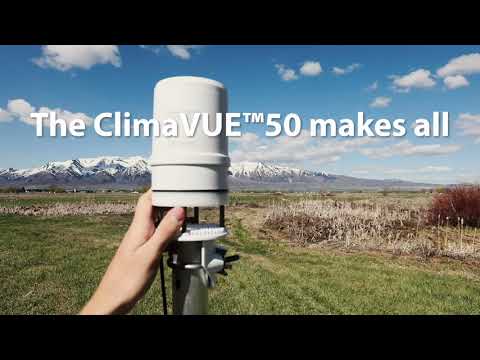
An Overview of the ClimaVUE™50
June 24, 2020 (0:30)
A brief overview of this all-in-one meteorological sensor
Watch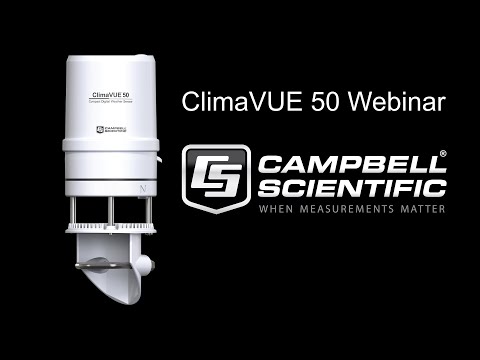
Introducing the ClimaVUE™50: A Webinar
May 21, 2020 (36:27)
A webinar regarding the all-in-one meteorological sensor followed by a question and answer session
Watch
Displaying and Customizing Units of Measurement in CampbellCloud
May 17, 2024 (3:38)
How to add units of measurement to the CampbellCloud Data Explorer display
Watch
Webinar | Where There's Smoke, There's Fire
June 28, 2021 (1:31:46)
How wind, visibility, and current weather affect burn scar monitoring
Watch- View all videos and tutorials