RV50X
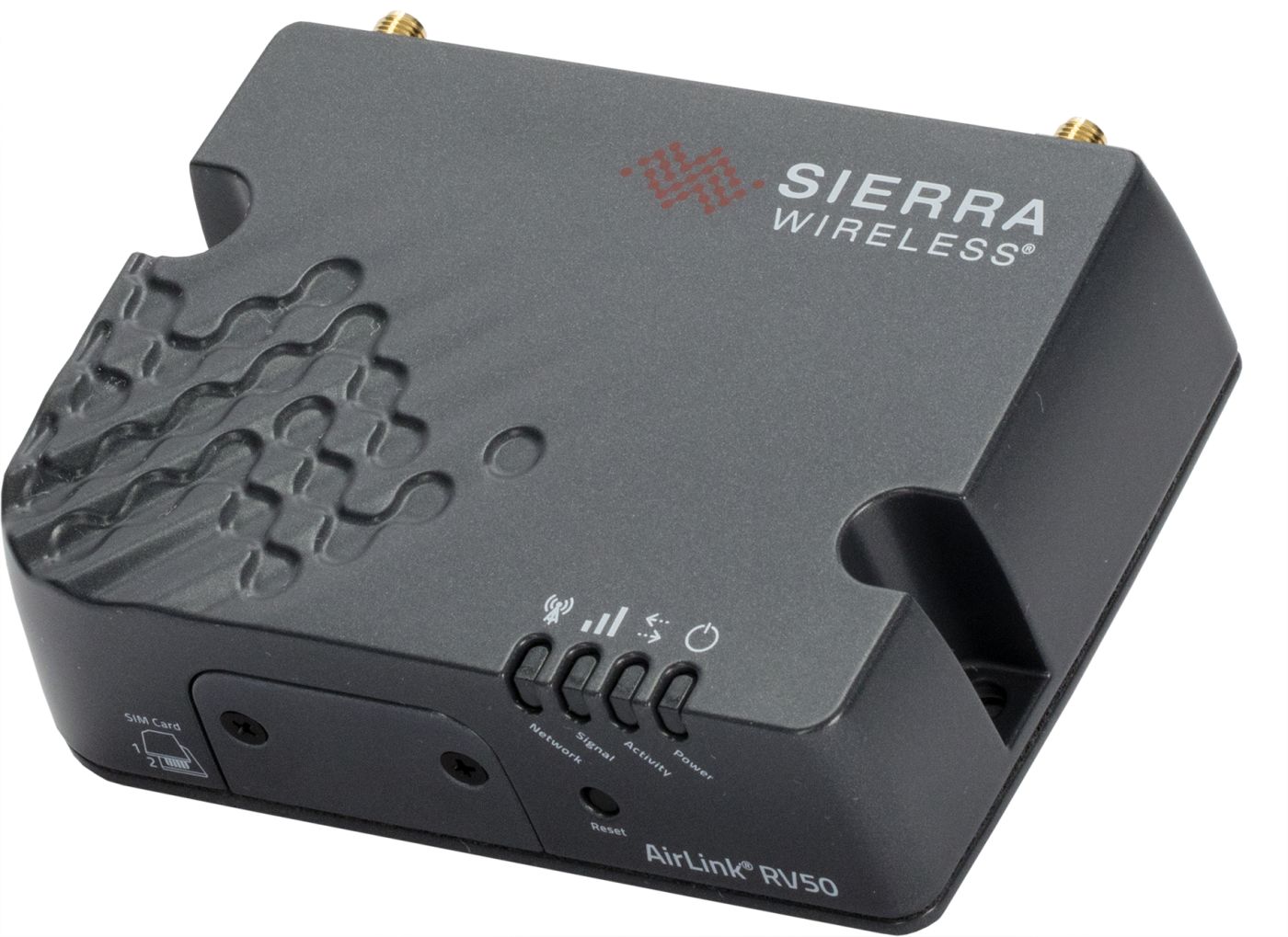
RV50X
OrderableConfigurableIndustrial 4G LTE Cellular Gateway
Pricing
Pricing temporarily unavailable.
Configuration
- Provisioned for Verizon USRV50X-NE-V
- Provisioned for Verizon US Static IPRV50X-NE-VS
- Provisioned for AT&T North AmericaRV50X-NE-AT
- Provisioned for International 1ARV50X-NE-IT1A
- Provisioned for International 1BRV50X-NE-IT1B
- No ProvisioningRV50X-NE-NP
Select a configuration to add to your quote
- Model:
- RV50X
- Item Number:
- RV50X
- Warranty:
- 1 year
- Lead time:
- 14 days
Overview
The RV50X is an industrial 4G LTE cellular gateway that provides serial and Ethernet connectivity to numerous cellular networks. (The RV50X automatically falls back to 3G when 4G coverage is not available.) The RV50X is capable of 4G LTE, 3G HSPA/HSPA+, and 3G TD-SCDMA (Asia Pacific model only) networking and is carrier-approved worldwide for Verizon, AT&T, T-Mobile USA, Rogers, Bell, Telus, and other cellular data carriers. The networking and carrier used by the RV50X are determined by the active SIM card(s) inserted into the device.
Note: The RV50X does not ship with a SIM card unless the cellular modem was provisioned with/for Cellular Data Services; the SIM card is provided by the carrier when signing up for service.
Key Advantages
Cellular data services available
Technical Description
The RV50X is an industrial 4G LTE cellular gateway. It requires at least one mini-SIM (2FF) card supplied by your cellular carrier and a suitable 12 or 24 Vdc nominal power source. The RV50X has an RS-232 serial port that can be used for serial server, serial client, and PPP host services. This port is commonly connected to a data logger RS-232 serial port. Additionally, it has an Ethernet port, as well as a host of Ethernet and IP services related to routing, port forwarding, VPN, and more. The RV50X has three antenna connectors to be used for primary and diversity antennas and GPS, although the unit can operate with only the primary cellular antenna connected.
Internet Connectivity
The RV50X provides Internet connectivity to any Campbell Scientific data loggers located within range of a compatible cellular network. Armed with Internet connectivity, a data logger can remotely connect to Campbell Scientific software on a PC, mobile device, and the cloud. The RV50X can also enable many data loggers to communicate using other Internet protocols, such as Modbus, DNP3, email, and web (HTTP).
Device Intelligence
The RV50X is powered by the Sierra Wireless ALEOS embedded operating system. This allows the RV50X to provide highly reliable connectivity and remote device management independent of the device it is connected to. The numerous embedded services include IP serial server and client, local PPP host, dynamic DNS client, routing, VPN, and more.
Establishing Cellular Service
Campbell Scientific offers low-cost, cellular data service plans for the RV50X. Our data service plans include Verizon in the United States and AT&T in North America (US, Mexico, Canada), as well as international access to over 600 carriers in 185 countries. The Konect Router Service is included to assure a secure connection with Campbell Scientific data logger support software.
Configuring the RV50X
The RV50X is configured using ACEManager, a web-based configuration tool hosted by the gateway. ACEManager can be accessed using Internet Explorer or Firefox remotely over the cellular WAN or locally over Ethernet. A number of templates will be provided for download to make most configurations very simple after connection to ACEManager.
Data Logger Connection
Data loggers can be connected in a variety of ways to suit the needs of the application. Common methods include the use of serial or Ethernet peripherals. The 28899 Ethernet cable is shipped with the RV50X for connecting Ethernet devices.
Powering the RV50X
Compared to many other industrial cellular gateways, the RV50X has a very low power consumption. The average current consumption at 12 Vdc is about 65 to 95 mA when idle, depending on its configuration. Additionally, the RV50X can be turned on and off easily using a data logger C, U, or SW12V port. When using the SW12V terminal, the modem can typically be powered with a BP12 battery, a CH150 charger/regulator, and an SP10 solar panel (collecting data no faster than every 15 minutes and not collecting image files).
Antennas
Campbell Scientific offers two antennas for the RV50X. Our higher gain omnidirectional (pn 32262) and Yagi (pn 31128) antennas require a cable to connect them to the RV50X. The COAXSMA cable connects the antennas directly to the RV50X cellular antenna connector. The COAXNTN cable and a surge protector (pn 31317) are used when the RV50X is susceptible to lightning or electrostatic buildup or for long cable runs. Two external antennas are required for reliable 4G LTE communications.
Benefits
- Easily provides Internet connectivity to Campbell Scientific data loggers and peripherals anywhere there is cellular network coverage
- Very low power consumption when compared to other industrial cellular gateways
- Compatible with most Campbell Scientific data loggers
- 4G LTE networking with automatic fallback to 3G
- Works with many cellular network carriers
- Ready to use out of the box—no need to work with a cellular carrier for modem provisioning and data plans when coupled with Campbell Scientific Data Services
Specifications
- Network Technology
- 4G
(with automatic fallback to 3G)
- RF Connectors
- 3 female SMA jacks
(for primary cellular and optional diversity cellular and GPS)
- Operating Temperature Range
- -30° to +70°C
- Host Interface
- 10/100/1000 Ethernet RJ45
- Host Interface
- RS-232 Serial DTE DB9 Female
- Host Interface
- USB 2.0 Micro-B
- Dimensions
- 11.9 x 9.4 x 3.4 cm
(4.69 x 3.7 x 1.34 in.)
- Weight
- 320 g
(11.3 oz)
Cellular WAN - North America/EMEA Countries Model
- Carrier Approval
- Verizon, AT&T, T-Mobile USA, Southern Linc, Spring, US Cellular, Rogers, Telus, Bell
- 4G LTE Frequency Bands
- B1, B2, B3, B4, B5, B7, B8, B12, B13, B20, B25, B26, B29, 41
- 3G HSPA/HSPA+ Frequency Bands
- B1, B2, B3, B4, B5, B8
- Industry Approvals
- FCC, IC, PTCRB, R&TTE, GCF, and CE
- Radio Type
- Software-defined
(with automatic network operator switching)
- Interfaces
- Dual SIM interfaces (2FF)
- Radio Output Power
- 23 dBm on LTE
- Radio Output Power
- 23 dBm on UMTS
Cellular WAN - Asia Pacific Model
- Carrier Approval
- Telstra
- 4G LTE Frequency Bands
- B1, B3, B5, B7, B8, B18, B19, B21, B28, 38, 39, 40, 41
- 3G HSPA/HSPA+ Frequency Bands
- B1, B5, B6, B8, B9, B19
- 3G TD-SCDMA Frequency bands
- B39
- Industry Approvals
- RCM, JRF/JPA, Anatel
- Radio Type
- Software-defined
(with automatic network operator switching)
- Interfaces
- Dual SIM Interfaces
(2FF)
- Radio Output Power
- 23 dBm on LTE
- Radio Output Power
- 23 dBm on UMTS
Power
- Operating Voltage
- 7 to 36 Vdc
- Typical Enable/Ignition Sense Low
- 1 mA
(@ 12 Vdc)
- Typical Idle
- 65 to 95 mA
(@ 12 Vdc, depending on configuration)
- Typical Active
- 250 to 300 mA
(@ 12 Vdc, depending on configuration)