The Future of Solar Power in India
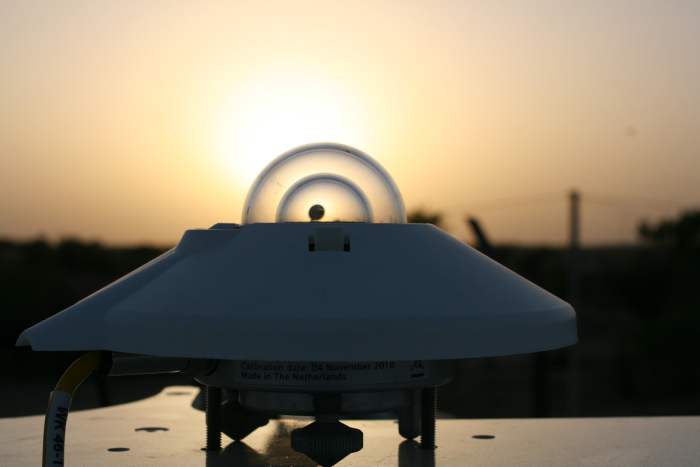
The Jawaharlal Nehru National Solar Mission (JNNSM), an initiative of the Government of India and Indian State Governments, has targeted generating 100 GW of the country’s national power through solar sources by the year 2022.
In the next few years, the country will experience massive increases in power inputs coming from solar sources and the stability of the grid will rely heavily on the ability to measure, forecast, and study solar radiation data from ground-based or on-site measurement sources. The reliability and sustainability of large-scale solar production may be vulnerable if solar data and studies lack accuracy. This underlines the ever-growing importance of regularly calibrating solar radiation instrumentation.
Pyranometer Calibration is Key to Solar Power Stability
Kipp & Zonen, the world’s leading manufacturer of radiometers, recommends their solar radiation instruments that are operating in the field are calibrated at regular intervals, ideally every two years. After a two-year period in the field, the sensitivity of an instrument is slightly altered due to prolonged exposure to the sun, and that can cause some deviation in the sensor’s measurement properties.
Pyranometer calibration to an international standard addresses this issue, and ensures the data is reliable and intercomparable, guaranteeing its quality for both the Indian solar industry and for international scientific research on solar radiation.
The World Standard for Pyranometer Calibration
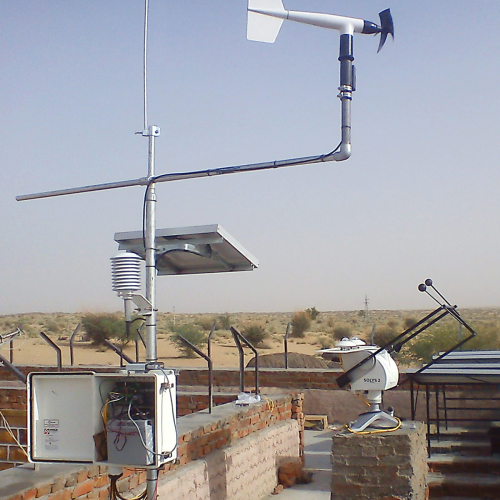
Pyranometers are calibrated by simultaneously conducting a comparison of the measurement values from the test instrument to the values from one, or more, reference instruments under monitored conditions.
The characteristics and performance classifications of pyranometers are defined in ISO 9060. The most commonly used indoor and outdoor calibration methodologies are described in ISO 9847 (ASTM E824) ‘Solar Energy - Calibration of Field Pyranometers by Comparison to a Reference Pyranometer’.
The reference pyranometer must have a reliable calibration traceable to the World Radiometric Reference (WRR), which is the primary measurement standard representing the SI unit of irradiance. The WRR is located at the World Radiometric Center (WRC) in Davos, Switzerland.
Indian National Calibration Facility for Radiometers
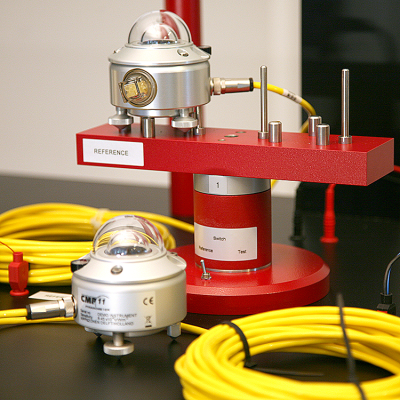
To facilitate the recommended pyranometer calibrations for clients in India, Campbell Scientific Canada, a world leader in providing monitoring systems for Renewable Energy Applications, has teamed up with Kipp & Zonen to install and operate the Indian Calibration Facility for Radiometers (INCFR) in Gurugram, India.
The facility performs pyranometer calibrations to Annex A3.1 of ISO 9847, which is described in the standard as the “Kipp & Zonen Device and Procedure”.
This state of the art facility will allow clients to calibrate their Kipp & Zonen radiometers without the expense or downtime that comes with shipping sensors to foreign calibration facilities. The increased efficiency, decreased cost, and higher level of service the facility brings will make the INCFR an indispensable resource to Indian clients.
Related Articles
Intelligent Road Weather Information Systems (RWIS) on Canadian Winter Roads
June 1, 2017
Using Loops in CRBasic to Prevent Unnecessary Skipped Scans
Learn how to avoid having false skipped scans.
May 31, 2017
Using Loops in CRBasic to Prevent Unnecessary Skipped Scans
Learn how to avoid having false skipped scans.
May 31, 2017
Using Loops in CRBasic to Prevent Unnecessary Skipped Scans
Learn how to avoid having false skipped scans.
May 31, 2017