In a world where measurements matter and fiscal responsibility is a primary concern, how do you quantify the impact of a tailings dam failure? What is the cost in terms of potential losses? What is the cost for preventive monitoring? In this article, we’ll use real numbers to better understand the real costs involved.
The Cost of Potential Losses
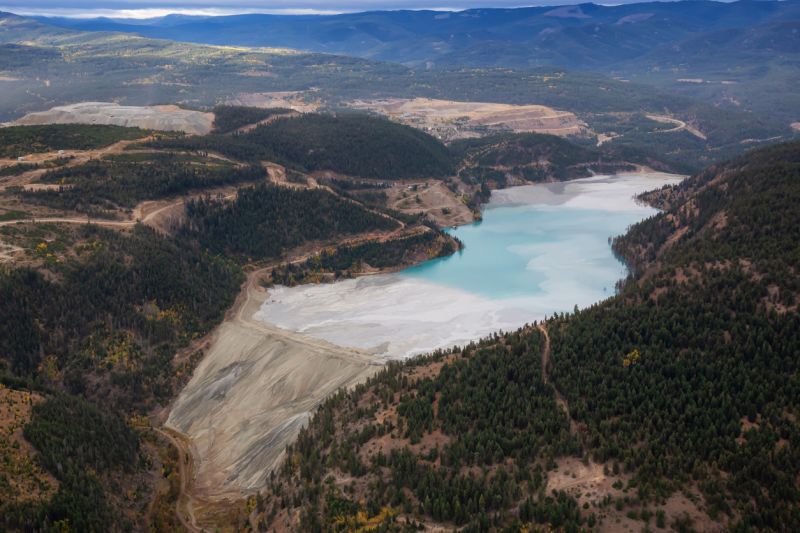
Tailings dams are specifically engineered to contain and store waste (tailings) from mines. There are an estimated 18,000 to 21,000 tailings dams in the world, and approximately 3,500 of them are currently active. Each year, mining operators increase the size of their active dams, potentially making them more unstable. The need to monitor the structure of these tailings dams is paramount, both from a safety and fiscal perspective.
The risk of a tailings dam failure is low in probability but catastrophic in consequence. In a paper by Bowker and Chambers1, it is estimated that tailings dam failures categorized as “Very Serious” cost an average of $543 million, while failures categorized as “Serious” cost an average of $83 million.
The number of failures is increasing every year as new dams are built, upstream dams age, and active dams are made larger. In addition, there is a push to use lower-grade materials, creating more wet load and stress, as well as more susceptibility to static failure. In a second paper by Chambers and Geop in 20192, they detailed 20 Very Serious or Serious failures that occurred between 2010 and 2019. Following historical trends, the website https://worldminetailingsfailures.org/3 estimates there will be 18 Very Serious or Serious failures between 2015 and 2024.
The Cost of Preventive Monitoring
Let’s look at what the cost of preventive monitoring is in relation to the cost of a tailings dam failure. For the purpose of this exercise, and for the sake of simplicity and understanding, we will say that there is one Very Serious tailings dam failure and one Serious failure every year. The cost of these two failures every year is at least $600 million. Historically, 85% of these failures come from the ~3,500 active tailings dams. Using these numbers, a theoretical insurance premium for an active mine would, on the lowest possible end, be ~$24,000 per month.
Obviously, a lot of assumptions were made to arrive at that figure. This simplistic model doesn’t account for the age, construction, or status of the dams. It also doesn’t account for the “minor” failures that can still cost lives and millions of dollars. The model also assumes buy-in from operators at every active tailings dam in the world.
Now, I don’t know about you, but I’d prefer to spend $24,000 once on preventive monitoring than $24,000 a month every year for insurance premiums. I’d rather try to get the data needed to prevent having Very Serious or Serious failures every year.
Example 1
To get the needed measurement data, it is possible to manually collect the data at your dam. In fact, you may be using this manual method currently because you fear the cost of automating your data collection would be too high. Let’s use some real numbers to look at the cost of manual data collection:
- Your technician’s annual salary is $50,000. Based on a 40-hour work week, this is $24 per hour.
- You send a technician out for 30 minutes every day, seven days a week, for a year to get your daily measurements.
- Your cost just for that technician will be $4,380 a year.
- If it takes an hour a day (instead of 30 minutes), double that cost to $8,760 a year.
This “manual monitoring” system is costing you a lot of money day after day, year after year.
Now, let’s compare the cost of this manual monitoring to the cost of a simple automated system using three piezometers, a data logger, a battery, a solar panel, and a radio to transmit your measurement data to your operation room. This system would cost approximately $4,000. If you switched from manual data acquisition to an automated monitoring system, you’d have the equipment paid off in less than a year based on the labor cost of the technician.
Example 2
Let me go to a greater extreme to show that automating your data monitoring will always save you money in the long run. Here’s another example:
- Your technician’s annual salary is $30,000. Based on a 40-hour work week, this is $14.42 per hour.
- You send the technician out for 15 minutes every day, seven days a week, for a year to get your daily measurement data from the three piezometers.
- Your cost just for that technician will be $1,315 a year.
An automated system would be paid off in just over three years based on the labor cost of the technician. And for a larger system—with several stations separated by greater distances—automation will save tens of thousands of dollars over its lifetime. Consider that some of our data loggers have been deployed in the field for 30 years and are still making accurate, reliable measurements! That is a lot of time, money, and hassle saved.

In Summary
The need to instrument tailings dams and automate their structural monitoring is paramount, both from a safety and fiscal perspective. Long-term monitoring solutions will give you the reliable data you need to avoid catastrophe and save money.
Instrumentation and monitoring can be seen in many ways. As a tool. As a regulatory nuisance. As a science experiment. Or as an important part of safety. We hope you see our equipment as an investment. An investment that, at worst, will save you money, time, and workforce hours, and at best, may save people’s lives and billions of dollars.
For more information about implementing an automated system for your tailings dam monitoring project, please contact our infrastructure specialists at (435) 227-9040.
References
1Bowker, L.N., and D.M. Chambers. 2015. The Risk, Public Liability and Economics of Tailings Storage Facility Failures.
2Chambers, David & Geop, P. (2019). The Increasing Number of Tailings Facility Failures: Navigating the Decade 2020-2029.
3Lindsay Newland Bowker, World Mine Tailings Failures, accessed 29 April 2022, https://worldminetailingsfailures.org/