
While you may have no problem identifying which standard polarity RF connectors are pin (male) or socket (female), do you find it difficult to identify the gender of reverse polarity connectors? If so, don’t worry. You are certainly not alone. In addition to the gender issue, it’s easy to get confused by the many different types of RF connectors used with Campbell Scientific equipment. When you try to mate your devices, you may sometimes wonder which connector type you have and which connector type you need.
In this short article, I’ll explain the difference between pin (male) and socket (female) RF connectors in terms of their polarity—standard or reverse (RP). I’ll also include a number of images to help you identify the various types of connectors we commonly use.
Some Background
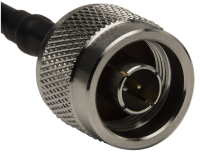
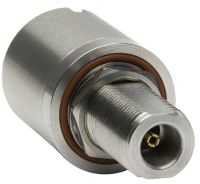
RF (radio frequency) connectors are commonly used on many of our products, such as radios, surge protectors, enclosures, coaxial cables, and antennas. These connectors, however, come in a variety of types. The most common connector types are these:
- Type N
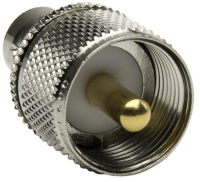
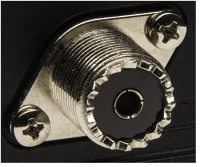
- UHF (PL259)
- TNC
- Reverse Polarity TNC (RPTNC)
- BNC
- SMA
- Reverse Polarity SMA (RPSMA)
You might wonder how reverse polarity connector types became so common. This is a result of the FCC (Federal Communications Commission) introducing regulations for low-power non-licensed transmitters, which are commonly known as Part 15 transmitters. Twenty years ago, the FCC in the U.S. introduced the practice of using “unique connectors” (that is, connectors that are not a standard part at electronics stores). The theory behind this practice was that it would be difficult for someone to purchase and attach a non-certified antenna to a device.
In the past two decades, however, the practice of using “unique connectors” has become commonplace, which has led to the proliferation of reverse polarity connector types. So, let’s sort them out.
Gender and Polarity
When you’re trying to identify pin (male) and socket (female) connectors, you may find it helpful to keep in mind the following:
- When mating two connectors, it is important to ensure that both connectors have the same polarity. For example, both should be RPSMA.
- Typically, RF plugs are pin (male), and the threads are on the inside of the shell.
- Typically, RF jacks are socket (female), and the threads are on the outside of the shell.
- The shell of a plug (male) typically covers the shell of a jacket (female).
Building off of these concepts, here are some more helpful descriptions:
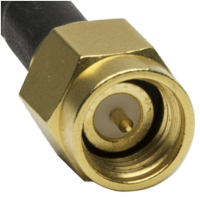
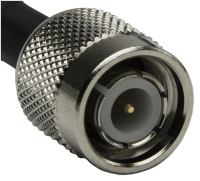
- A standard polarity plug (male) has a center pin that sticks out from the middle, and the plug’s shell has threads on the inside. Here we have shown an SMA plug, typically found on the end of a coaxial cable that connects to products such as cellular gateways or GPS receivers.
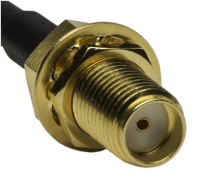
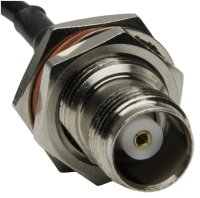
- A standard polarity jack (female) has a socket in the middle designed to receive the pin from the plug (male), and the jack’s shell has threads on the outside. Here we have shown an SMA jack, typically found on a radio such as a cellular gateway or GPS receiver.
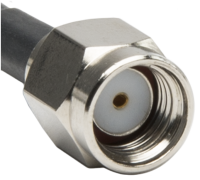
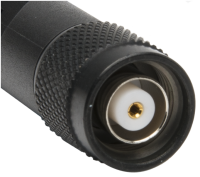
- A reverse polarity plug (male) has a socket in the middle designed to receive the pin from the jack (female) connector, and the plug’s shell has threads on the inside. Here we have shown an RPSMA plug, typically found on the end of a coaxial cable that connects to products such as the RF451, RF407-series, and CR6-WIFI.
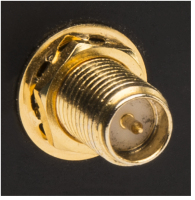
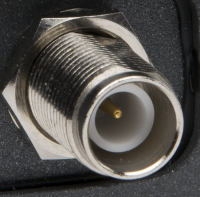
- A reverse polarity jack (female) has a center pin that sticks out from the middle, and the jack’s shell has threads on the outside. Here we have shown an RPSMA jack, typically found on a radio such as our 900 MHz spread-spectrum and Wi-Fi devices.
Remember:
- A standard polarity jack (female) has a socket, whereas a reverse polarity jack (female) has a pin.
- A standard polarity plug (male) has a pin, whereas a reverse polarity plug (male) has a socket.
Connector Types and Genders
The following table identifies for you the various types of connectors we commonly use and their genders:
| Connector Type | Plug (Male) | Jack (Female) |
| Type N |
(pin with threads inside) |
(socket with threads outside) |
| UHF (PL259) |
(pin with threads inside) |
(socket with threads outside) |
| TNC |
(pin with threads inside) |
(socket with threads outside) |
| Reverse Polarity TNC (RPTNC) |
(socket with threads inside) |
(pin with threads outside) |
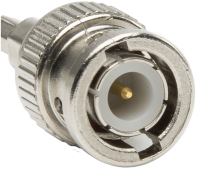
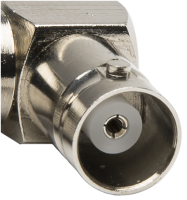
| BNC |
(pin with threads inside) |
(socket with threads outside) |
| SMA |
(pin with threads inside) |
(socket with threads outside) |
| Reverse Polarity SMA (RPSMA) |
(socket with threads inside) |
(pin with threads outside) |
I hope the descriptions and images have helped you understand the differences between the connector types and the interplay of polarity and gender.
Stay connected (with your devices and us), and post your comments below.
Related Articles
Campbell Core Technology: The Data Logger
Get an introduction to the various parts of a datalogger’s wiring panel so you can maximize the benefit you receive from your datalogger.
March 21, 2018
Campbell Core Technology: The Data Logger
Get an introduction to the various parts of a datalogger’s wiring panel so you can maximize the benefit you receive from your datalogger.
March 21, 2018
Campbell Core Technology: The Data Logger
Get an introduction to the various parts of a datalogger’s wiring panel so you can maximize the benefit you receive from your datalogger.
March 21, 2018
Campbell Core Technology: The Data Logger
Get an introduction to the various parts of a datalogger’s wiring panel so you can maximize the benefit you receive from your datalogger.
March 21, 2018