In our previous calibration blog article, we established calibration’s critical role in ensuring reliable, accurate measurements across diverse fields. We examined the very essence of calibration and its significance for safety, efficiency, and quality. Now, in this second article, we shift our focus to traceability assurance, a cornerstone of guaranteeing the trustworthiness of measurement results.
| Recommended for you: If you missed our first calibration blog article, "Calibration Essentials: Importance," take a moment to read it now. |
Traceability Assurance in Meteorological Measurements
Imagine a scenario where temperature readings from weather stations deviate slightly across different regions. This inconsistency can lead to inaccurate weather forecasts and pose challenges in understanding global climate patterns. Traceability assurance in calibrations helps address this very concern.
What is traceability assurance?
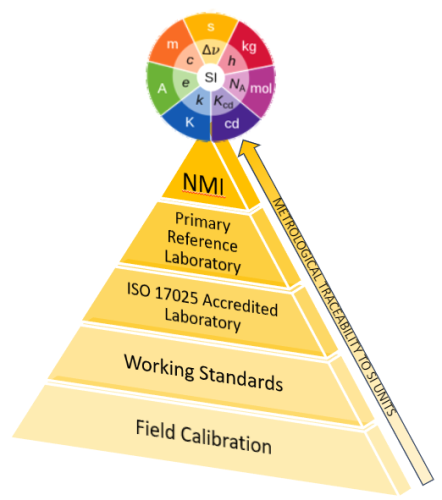
Traceability assurance establishes an unbroken chain of comparisons linking a measurement device's readings back to internationally recognized standards. This chain typically involves the following:
- International Bureau of Weights and Measures (BIPM): This organisation maintains the primary international measurement standards and is the home of the International System of Units (SI). SI units are at the very top of the traceability hierarchy to which the unbroken chain of comparisons should link.
- National Metrology Institutes (NMI): These institutions act as the highest authority for ensuring measurement accuracy within their respective countries. They participate in international comparisons to guarantee their standards are consistent with international references.
- Primary reference laboratories: This type of laboratory calibrates instruments using reference standards provided by NMIs.
- ISO/IEC 17025-accredited laboratories: These laboratories provide calibration services traceable to national standards.
Why is traceability assurance important?
Traceability assurance minimizes uncertainty in measurements, fostering confidence in the data's validity. This is particularly crucial in fields such as meteorology, where accurate and consistent data are paramount for weather forecasting, climate monitoring, and research.
Levels of Traceability Assurance
The following guidance from the World Meteorological Organization (WMO) provides a brief explanation of the different levels of traceability assurance:
- Fully assured traceability (target scenario): This level of traceability assurance is achieved through calibration by ISO/IEC 17025-accredited laboratories and adherence to regular instrument calibrations. This ensures the highest level of measurement reliability.
- Assured traceability (acceptable but improvement recommended): At this level, non-accredited labs perform the calibration with equipment traceable to accredited standards. While this level is acceptable, Campbell Scientific recommends striving for full accreditation for enhanced confidence.
- Partially assured traceability: This level of traceability assurance is limited to field inspections using calibrated kits with traceable calibrations. This approach offers some level of assurance but necessitates improvement for critical applications.
- Lack of traceability: Because of the inherent unreliability of measurements, Campbell Scientific does not recommend this approach.
Recommendations and Additional Information
The WMO emphasizes the importance of traceability for its member states. For example:
- National Meteorological and Hydrological Services (NMHS) are encouraged to establish or strengthen their calibration capabilities to ensure measurements align with international standards.
- Regular instrument calibration and adherence to quality management systems such as ISO/IEC 17025 are essential for maintaining data integrity.
Campbell Scientific Calibration
At Campbell Scientific, we understand the vital role of traceability assurance in scientific measurements. Our calibration services are performed by factory-trained technicians using equipment traceable to national standards. We offer various calibration methods to suit your specific needs, ensuring your data collection adheres to the highest levels of accuracy and reliability.
Remember: Consistent and reliable measurements are fundamental for informed decision-making and successful outcomes in various fields. By implementing proper calibration procedures, adhering to established traceability protocols, and leveraging the expertise of providers such as Campbell Scientific, you can ensure the integrity of your measurement data and contribute to a world of accurate and reliable scientific information.
Additional Resources
For more information, you may want to refer to these resources:
- BIPM website
- CIPM Mutual Recognition Arrangement (CIPM MRA) website
- ILAC (international organisation for accreditation bodies operating in accordance with ISO/IEC standards) website
- ISO/IEC 17025 Testing and Calibration Laboratories website
A Final Word
I hope this article has helped illustrate the importance of traceability assurance in your meteorological measurements. In the next blog article in this series, we’ll take a closer look at calibration frequency. If you have any questions or comments, please post them below.
Credits: Ramatoulaye Nabi of Campbell Scientific contributed to this article.